
Only a 100 amp service
Plenty of older Tri-Cities homes still have 100 amp service. Adding a 48 amp continuous load to that usually calls for either load management or a service upgrade.
A Level 2 charger is a 240 volt circuit, a load calculation, a permit and an inspection. The load calculation is the part that decides everything else, because it tells us whether your existing service can carry the charger or whether the panel has to be dealt with first. Kyle Gale runs that calculation before quoting, so the number you get is the real one.
Plenty of older Tri-Cities homes still have 100 amp service. Adding a 48 amp continuous load to that usually calls for either load management or a service upgrade.
A 240 volt circuit needs two adjacent spaces. A full panel means a sub-panel, a panel replacement, or a listed tandem arrangement if the panel is rated for it.
Level 1 charging on a 120 volt receptacle adds only a few miles of range per hour. For most Tri-Cities commutes that barely keeps even overnight.
Charging through an extension cord is a fire risk and is prohibited by every EV manufacturer. If that is the current setup, it needs to be corrected now, not later.
Two chargers on one service is a load management question, not just a second circuit. Planning both at once costs far less than doing the work twice.
Before anything can be sized, we have to know what your service can carry. NEC 220.83 gives a calculation method for adding load to an existing dwelling. NEC 220.87 gives a second method based on measured maximum demand, using the highest fifteen-minute demand recorded over the previous year multiplied by 125 percent. Where good utility interval data is available, 220.87 frequently shows more available capacity than the calculated method does.
This matters because the answer changes the price of the job by thousands of dollars. A 200 amp service in a newer West Richland or south Kennewick house often has room for a 60 amp circuit without touching the panel. A 1950s Richland house on 100 amp service with an electric range and dryer may not, and then the conversation turns to a service upgrade or a load management device. We run the numbers before quoting, not after the work has started.
EV charging is a continuous load, so the circuit gets sized at 125 percent of the charger output under NEC 625.41. That is why a 40 amp breaker supports 32 amps of charging, a 50 amp breaker supports 40 amps, and a 60 amp breaker supports 48 amps. Charger amperage is what determines charging speed. Most Level 2 units are adjustable, so a 48 amp unit can be commissioned at 32 amps on a 40 amp circuit when that is what the service supports.
Faster is not automatically better. A 32 amp charger adds roughly 25 to 30 miles of range per hour for a typical EV, which fully recovers a normal Tri-Cities commute in a couple of hours overnight. The case for 48 amps is a large battery, a long daily drive, or two vehicles sharing one unit. Paying for a service upgrade to reach 48 amps when 32 already covers your driving is money that could have stayed in your pocket.
A NEMA 14-50 receptacle lets you plug in a portable charging cord, which is convenient and makes the unit easy to take with you or replace later. It comes with rules. The receptacle circuit requires GFCI protection under current code, the receptacle itself should be an industrial-grade device rather than the cheapest one on the shelf, and the circuit tops out at 40 amps of charging on a 50 amp breaker. Cheap 14-50 receptacles overheating under continuous load is a documented problem.
Hardwiring removes the receptacle as a failure point, and it is required above 48 amps. It also mounts more cleanly outdoors and generally holds up better through years of daily plugging and unplugging. The tradeoff is that swapping the unit later becomes an electrician visit instead of unplugging a cord. For a permanent home charger in a garage or on an exterior wall, we usually recommend hardwired unless you have a specific reason to want the plug.
EV charger installation is permitted electrical work. In most of Benton and Franklin County the permit and inspection go through Washington L&I, and the City of Richland runs its own electrical inspection program for work inside city limits. Either way we pull the permit and meet the inspector. Skipping the permit creates a problem at resale, can complicate an insurance claim, and means nobody independent ever verified a 48 amp continuous circuit in your attached garage.
On incentives, the honest answer is to check current programs before counting on anything. Federal tax credit rules for EV charging equipment have changed recently, and utility programs through Benton PUD and Franklin PUD come and go with their own eligibility rules and application steps. We will not quote you a credit amount or promise a rebate. Check the current federal guidance and your utility program page, and apply before the install if the program requires it.
We record the service size, existing loads and available spaces, then run the calculation under NEC 220.83 or NEC 220.87.
Charger amperage, breaker size and conductor size get chosen as one set, based on what the service supports and how you actually drive.
We pull the permit, run the circuit from the panel to the charger location in conduit or cable as the route requires, and mount the unit.
The charger is set to the correct amperage, tested with your vehicle plugged in, and we are on site for the inspection.
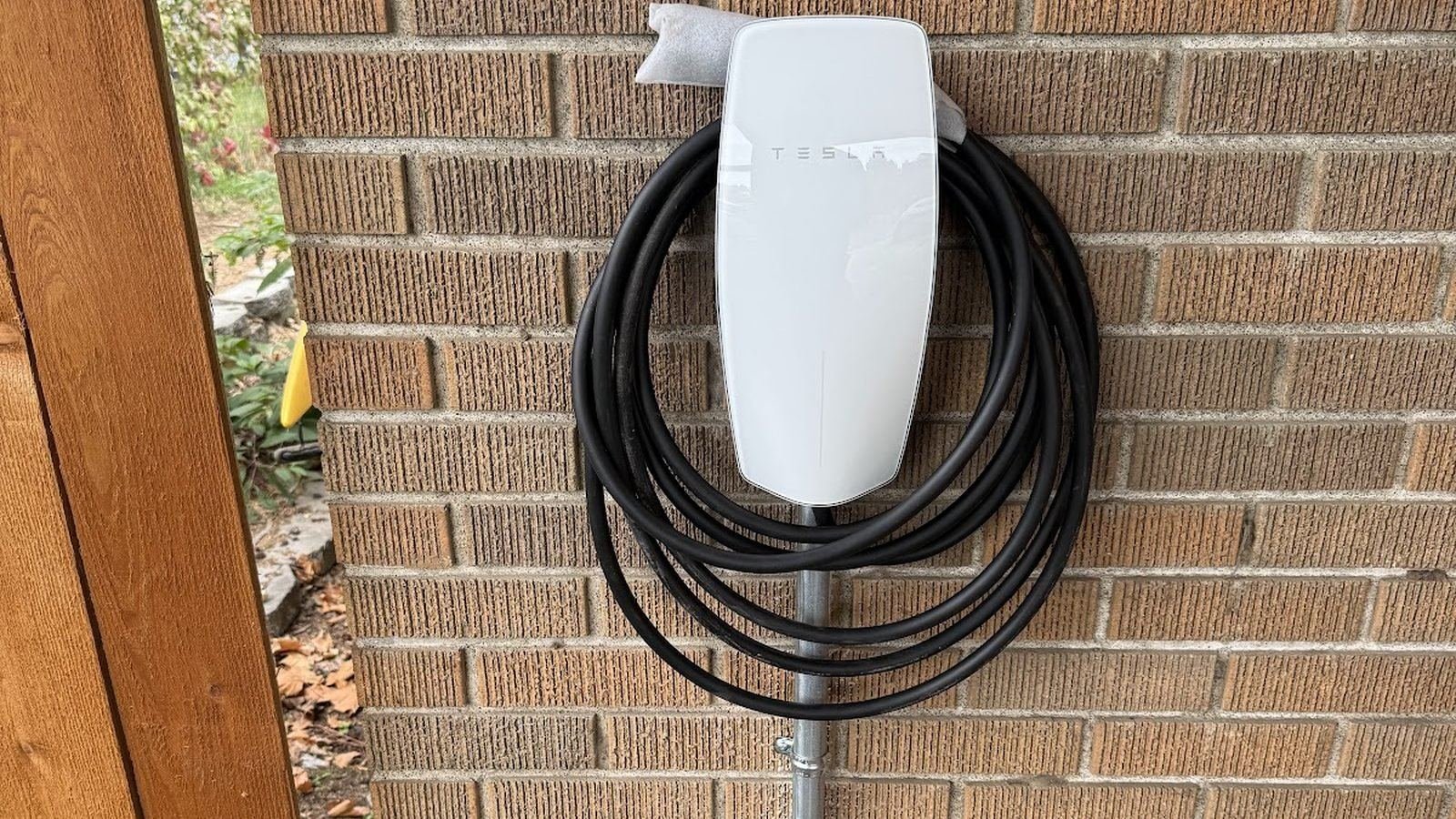
Tesla Wall Connector installation in the Tri-Cities. Hardwired 48A circuits, load calculations, permits, commiss
See details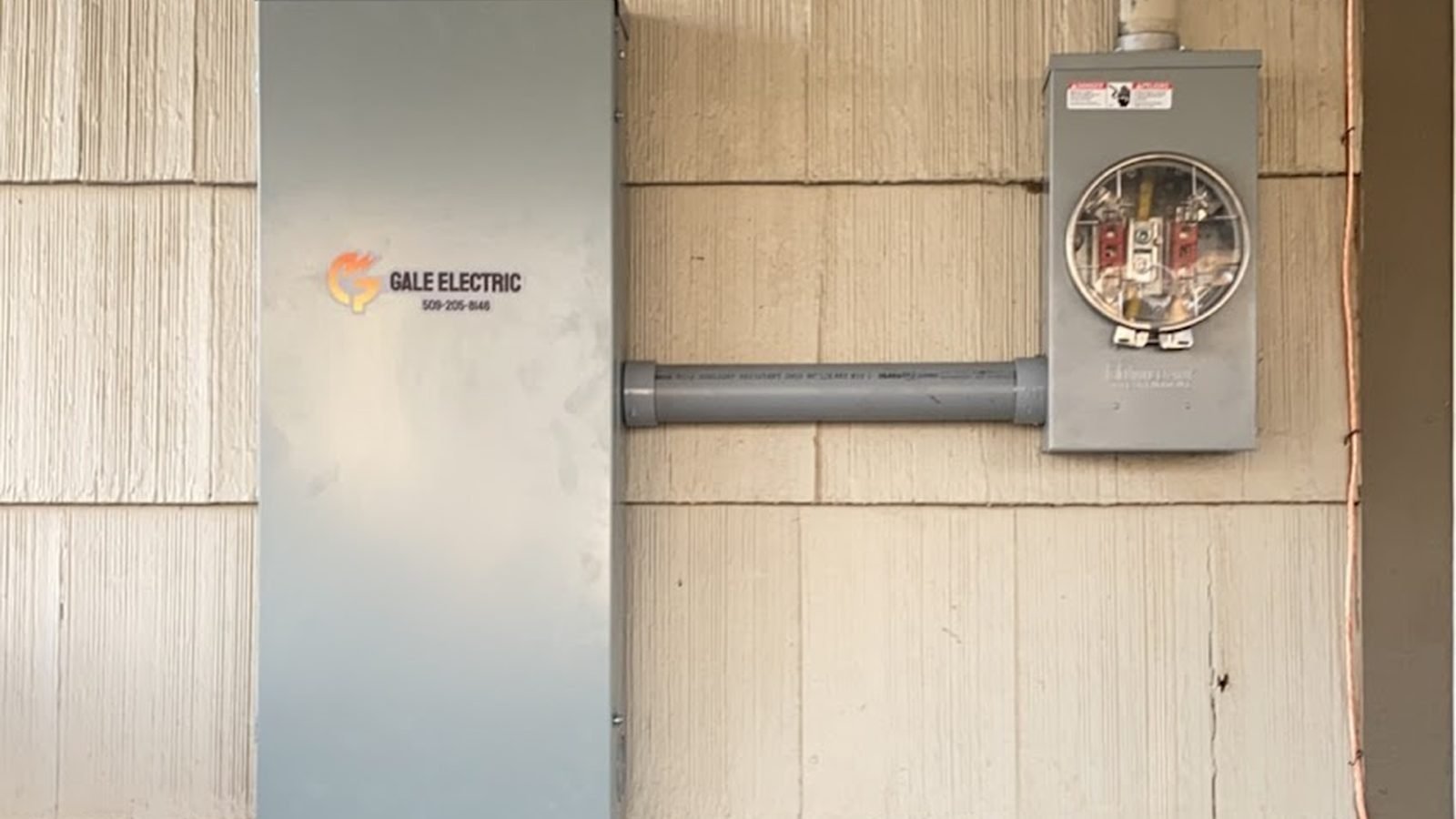
Out of breaker space for a heat pump, shop, or EV charger? Gale Electric upgrades residential panels across the
See detailsMoving from 100 to 200 amps for a heat pump, shop, or EV charger? Gale Electric handles the load calculation, pe
See detailsFree estimates across the Tri-Cities. Call Kyle and the crew, or send the details and we will come look.
We use cookies for basic analytics and to see which ads bring people here. No personal data is sold. Privacy policy