
Outages here last hours, not days
If your street is usually restored the same day, a battery covers the gap without an engine sitting in the side yard.
A home battery stores electricity and hands it back the instant the utility drops. No engine, no gas line, no pull cord, and nothing to refill. The tradeoff is runtime, because a battery only holds what fits in it. We size the system around the circuits you actually need through an outage, wire the backup panel, and handle the permit and inspection.
If your street is usually restored the same day, a battery covers the gap without an engine sitting in the side yard.
Grid-tied solar shuts down in an outage without storage. A battery and gateway are what let the panels keep working.
Small lot, close neighbors, or no gas service on the street. A battery makes no sound and stores nothing flammable.
A generator takes seconds to start and transfer. A battery carries the load fast enough that most equipment never notices.
Batteries need no operator. If you travel or work long shifts, the freezer stays cold without anyone touching anything.
Two numbers decide everything. Capacity, measured in kilowatt hours, is how much energy is stored and therefore how long you run. Continuous output, measured in kilowatts, is how much you can pull at once and therefore what will actually start. Single units on the market today commonly land somewhere between 5 and 13.5 kilowatt hours of storage, with continuous output roughly in the 5 to 11.5 kilowatt range. Both numbers stack when you install more than one unit.
In practice a single battery carries a refrigerator, a furnace fan, lighting, the internet, and phone charging comfortably through a night. Where it gets tight is anything with a heating element or a big compressor. An electric range, an electric water heater, a clothes dryer, or central air conditioning in July will drain a single unit fast, and some will not start on it at all. That is the honest conversation to have before you buy, not after the first outage.
The right answer depends on what your outages look like. Most interruptions here are short, caused by wind taking a line down or by equipment work, and they end the same day. A battery handles those perfectly and you barely notice them happening. The failure case is a multi-day event in January, where a battery without solar runs down and has no way to refill. A generator with a gas line does not care how long the outage lasts, as long as it gets oil and fuel.
Some homeowners install both, using the battery for instant clean coverage and the generator for endurance. That is more system than most houses need. If you are choosing one, we ask how often your street actually goes out, how long it stayed out last time, and whether summer cooling has to keep running. Those three answers usually make the decision obvious, and we would rather point you at the generator than sell you the battery that will not do the job.
Storage and solar work well together, and pairing them is the only way a battery gets through a long outage. During a daytime outage the array recharges the battery, which then carries the house overnight, and the cycle repeats. Without solar, a battery holds exactly what it charged from the grid before the power went out, and then it is done. If you already have grid-tied panels, adding storage also fixes the surprise most solar owners find out the hard way, which is that a grid-tied array shuts itself down in an outage.
Be careful with the savings math. Benton PUD and Franklin PUD rates are low compared to most of the country, and residential customers here do not face the steep time-of-day pricing that makes battery arbitrage pay off in other states. Buy storage for backup, and treat any bill effect as a small bonus rather than the reason. We will not build a payback spreadsheet that promises something the local rate structure cannot deliver.
Most systems mount on an interior garage wall or a shaded exterior wall. Temperature is the real constraint. Every manufacturer publishes an operating range, and an unconditioned Tri-Cities garage in August or a north wall in a January cold snap can sit outside it, which throttles output or shortens life. We pick the wall with that in mind, and we check the wall framing and the clearances the listing requires before anything gets mounted.
The wiring side is a gateway at the service that senses the utility and isolates the house during an outage, plus, in most designs, a backup loads panel holding the circuits the battery will carry. We move those circuits over, land the battery conductors, and set up the monitoring app. Systems are listed to UL 9540 as complete units, and the install follows NEC Article 706 for energy storage plus Article 705 where solar is tied in. It is permitted and inspected work.
We look at your panel, your PUD usage history, and the loads you want covered, then translate that into kilowatt hours and kilowatts.
You get a written proposal naming the equipment, the number of units, the backup circuit list, and the mounting location.
Battery and gateway mounted, backup loads panel built, conductors and communication wiring run, system commissioned on the app.
We meet the inspector, then cut the power on purpose so you watch the transfer happen and know what normal looks like.
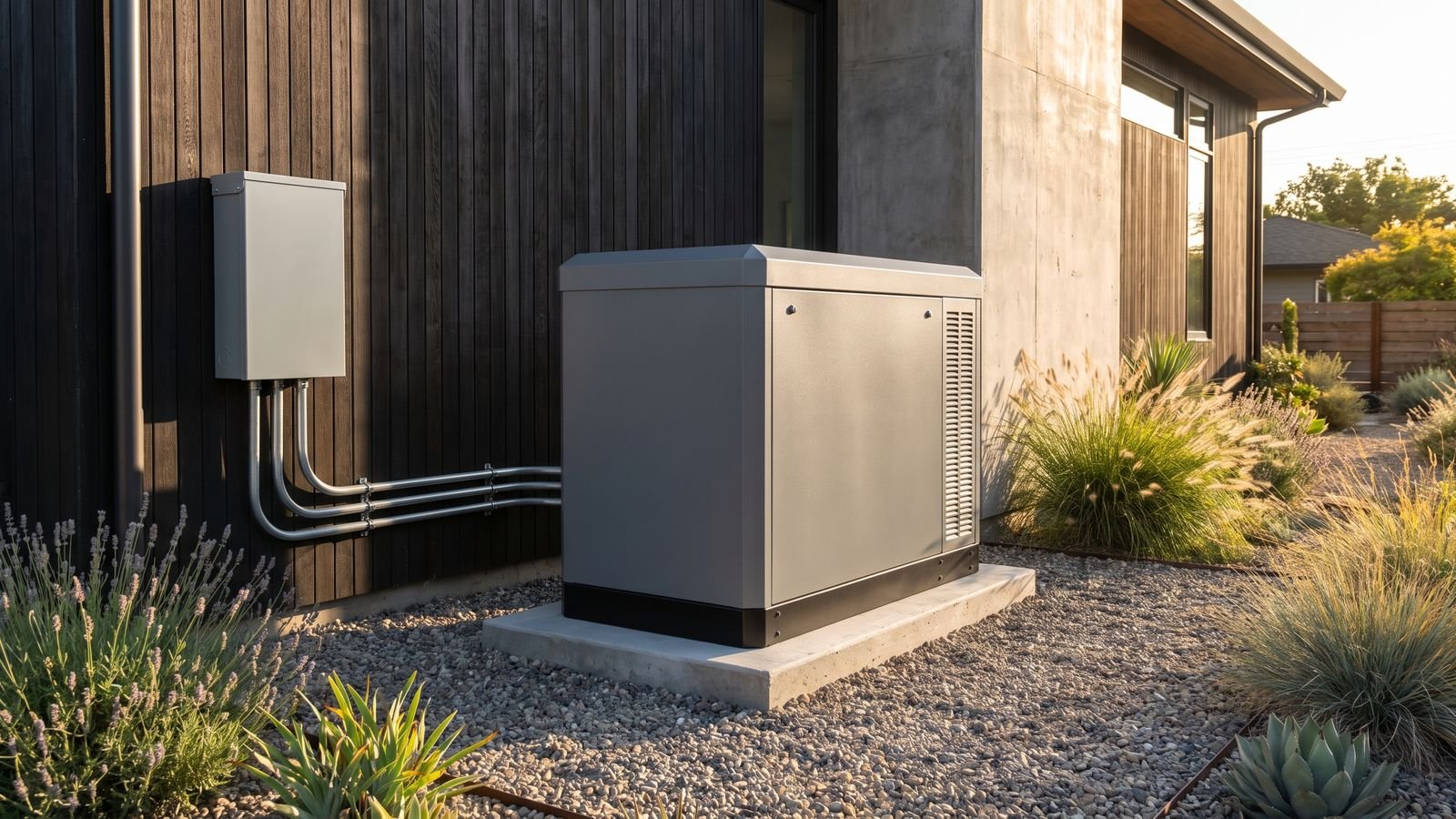
Standby generator installation in Kennewick, Richland, and Pasco. Kyle Gale sizes the unit, wires the transfer s
See detailsGenerator transfer switch installation in Kennewick, Richland, and Pasco. Automatic switches, manual switches, a
See details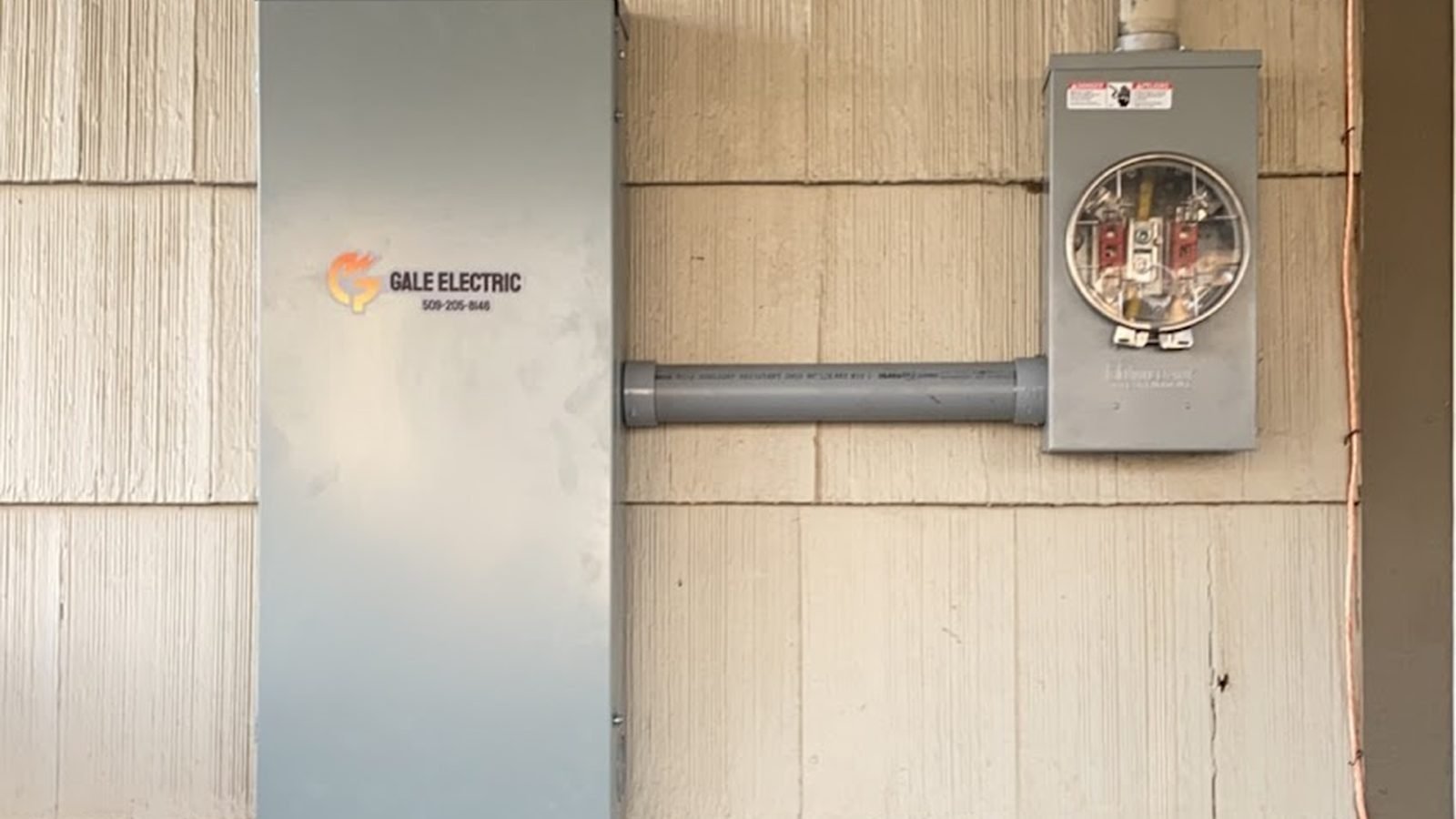
Out of breaker space for a heat pump, shop, or EV charger? Gale Electric upgrades residential panels across the
See detailsFree estimates across the Tri-Cities. Call Kyle and the crew, or send the details and we will come look.
We use cookies for basic analytics and to see which ads bring people here. No personal data is sold. Privacy policy