
Burning or hot plastic smell
That odor is melting insulation or a bus bar heating at a loose connection. Turn the main off if you can do it safely and call. This is the one panel symptom that should not wait until the weekend.
A panel does not have to be undersized to be dangerous. Bus bars corrode, breakers weld themselves shut, and heat cycling loosens terminations until a connection starts arcing behind the cover. If you smell hot plastic near the panel, see rust inside it, or own a brand with a failure history, replacement is the repair. Gale Electric replaces residential panels across the Tri-Cities, permit and inspection included.
That odor is melting insulation or a bus bar heating at a loose connection. Turn the main off if you can do it safely and call. This is the one panel symptom that should not wait until the weekend.
Moisture from a leaking weatherhead or a damp garage wall corrodes the bus and the breaker clips. Corroded contacts run hot, and rust on the bus cannot be cleaned back to a reliable connection.
A breaker that trips instantly or refuses to stay in has either found a real fault on the circuit or failed internally. Either way the cause needs to be traced before anything is forced back on.
Steady buzzing under load means arcing at a termination or a breaker that is not fully seated on the bus. Arcing generates heat inside a metal enclosure full of insulation.
These brands have documented histories of breakers that fail to trip during an overload. Current listed replacement breakers are not available for them, which makes full panel replacement the only real fix.
An upgrade increases the service size, usually from 100 amps to 200. A replacement swaps a failing or obsolete panel for a new one at the same rating. They are different jobs at different prices, and plenty of houses only need the second one. If your load calculation says 100 amps is adequate and the panel itself is the problem, a like for like replacement gets you a safe, code compliant panel without paying for new service conductors and a new meter base.
The right call comes out of the load calculation and the condition of the service equipment. If the meter base is sound, the conductors are intact, and the calculated load fits, replacement is the honest recommendation. If the house is already past capacity or an EV charger is coming next year, doing it twice costs more than doing it once at 200 amps. Kyle lays out both numbers during the estimate and lets you pick.
Panels fail at the connections. Aluminum service conductors expand and contract with every hot Tri-Cities afternoon, and over decades that movement loosens a lug that was torqued correctly on day one. Loose lugs heat, heat oxidizes the metal, and oxidized aluminum resists current, which produces more heat. The same cycle happens at breaker clips on the bus. By the time a homeowner smells it, the damage inside is usually visible as discoloration or pitting.
Breakers themselves age. A thermal magnetic breaker relies on a bimetal strip and a spring mechanism that has sat untouched for thirty years in a hot garage. Some of them still trip correctly. Some do not, and there is no way to know which by looking. That is the argument against reusing old breakers in a new panel, and it is why a proper replacement includes new breakers listed for the panel being installed, per NEC 110.3.
Richland has a large stock of homes built in the 1940s and early 1950s during the Hanford buildout, and many of them are on their second or third electrical system. Panels get added, subfed, and patched, and the history is rarely documented. It is common to open one and find three generations of work stacked together: original two wire circuits, a 1970s addition, and a recent kitchen remodel all landing on the same crowded bus.
Those panels need to be read before they are replaced. Kyle traces what actually feeds what, identifies any circuits with no equipment ground, and flags knob and tube or early cloth wiring if it turns up. Sometimes the panel replacement is straightforward and the branch wiring is fine. Sometimes the panel is the symptom and the wiring behind the walls is the real conversation. You get told which one you have before work starts.
The scope covers the enclosure, the main breaker, new branch breakers listed for that panel, a new neutral bar and separate ground bar, and re landing every existing circuit with proper conductor length and torque. Arc fault and ground fault protection is added where current code requires it for the circuits being reconnected, which typically means AFCI protection on bedroom, living area, and kitchen circuits under NEC 210.12 and GFCI protection in the locations listed in 210.8.
Labeling is part of the job, not an extra. Every circuit gets identified by room and use on a legible directory inside the door, which is a code requirement in NEC 408.4 and the single most useful thing a homeowner gets out of the project. The permit and inspection are included, and Kyle meets the inspector. When the cover goes on, you have documentation of what was done and a panel that an inspector has actually looked inside.
Kyle opens the panel, checks for heat damage and corrosion, identifies the brand and rating, and runs a load calculation. You get a written price and a straight answer about replace versus upgrade.
The permit is filed with L&I or the City of Richland, and the utility disconnect is scheduled with Benton PUD, Franklin PUD, or the Richland utility for a window that fits your day.
Old panel and breakers come out, the new enclosure goes in, and each circuit is re landed, torqued to spec, and given the arc fault or ground fault protection code requires for its location.
The inspector reviews the work before the cover goes on, then every breaker is labeled by room and use and tested under load with you present.
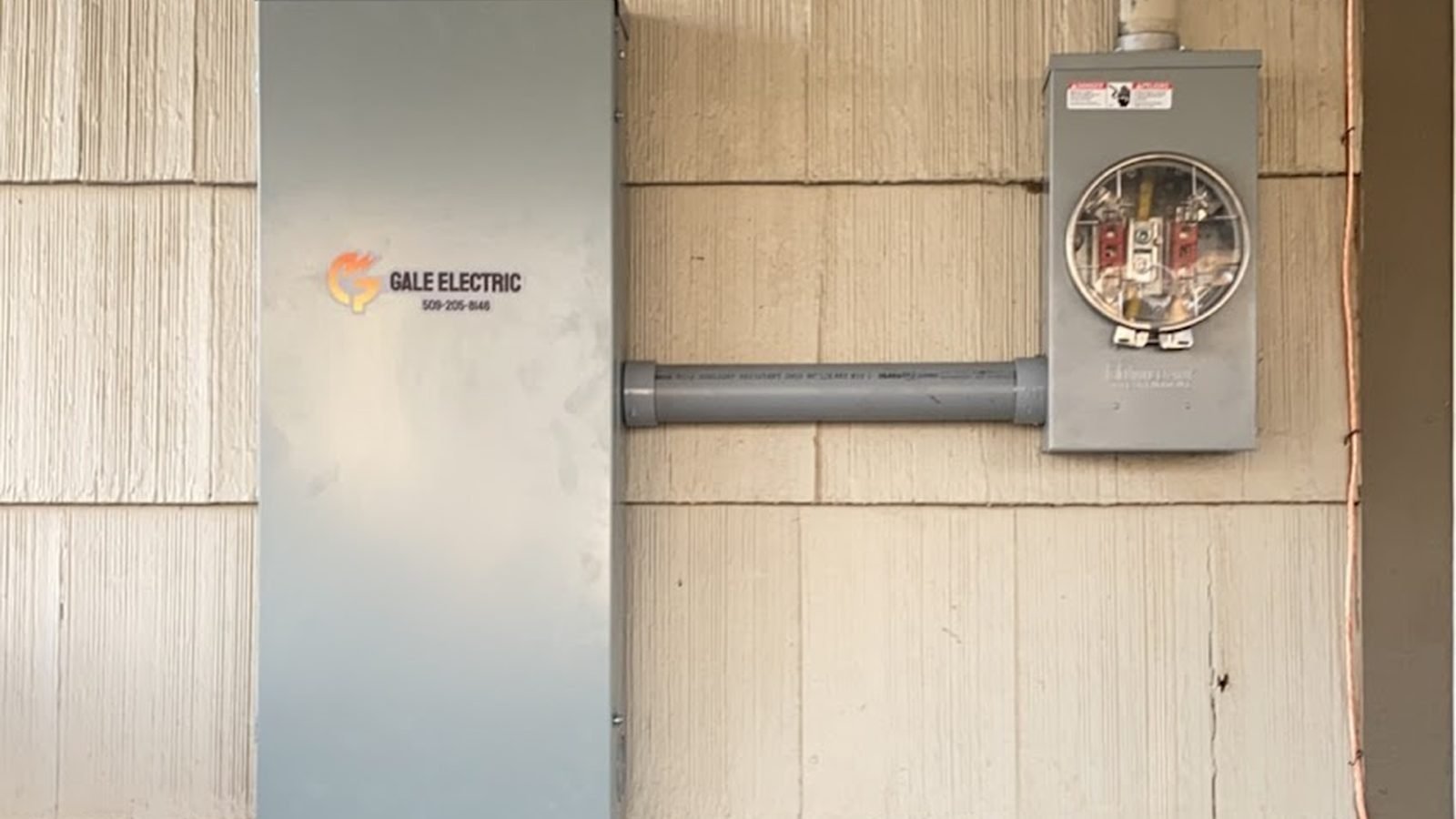
Out of breaker space for a heat pump, shop, or EV charger? Gale Electric upgrades residential panels across the
See detailsStill screwing in fuses? Gale Electric replaces old fuse panels with modern breakers in Kennewick, Richland, and
See detailsElectrical troubleshooting in Kennewick, Richland, and Pasco. Tripping breakers, dead outlets, flickering lights
See detailsFree estimates across the Tri-Cities. Call Kyle and the crew, or send the details and we will come look.
We use cookies for basic analytics and to see which ads bring people here. No personal data is sold. Privacy policy