
Breaker trips when two run
If the microwave alone is fine but the microwave and the toaster together trip the breaker, the circuit is at capacity. That is a wiring limitation, not an appliance defect, and swapping the appliance will not fix it.
Some appliances do not share well. A microwave, a window air conditioner, a chest freezer, or a shop compressor pulls enough current that anything else on the same circuit trips the breaker. A dedicated circuit runs from the panel to that one device and nothing else. Gale Electric installs them throughout Kennewick, Richland, Pasco, and West Richland, sized to the equipment rather than to the nearest available wire.
If the microwave alone is fine but the microwave and the toaster together trip the breaker, the circuit is at capacity. That is a wiring limitation, not an appliance defect, and swapping the appliance will not fix it.
A visible dip when the freezer, well pump, or compressor kicks on means the inrush current is dragging the circuit down. Motors that start on a sagging voltage draw more current and run hotter over their life.
Most manufacturers of ranges, dryers, dishwashers, and window units specify a dedicated circuit in the installation instructions. NEC 110.3(B) makes those instructions part of the code requirement, not a suggestion.
A freezer, space heater, or window air conditioner running through an extension cord is an overload waiting for a hot afternoon. Those loads need a receptacle on their own circuit within reach of the equipment.
A hot tub, an EV charger, a wall oven, or a shop tool arrives with an amperage rating on the nameplate. Running a properly sized circuit before delivery day is cheaper than solving it after the equipment is sitting in the driveway.
A dedicated circuit is a breaker, a home run of cable, and one outlet or one piece of equipment. Nothing else shares it. That means the full breaker rating is available to that device, and a fault on it does not take out the rest of the room. Sizing follows the equipment nameplate: 15 amps on 14 gauge copper, 20 amps on 12 gauge, 30 amps on 10 gauge, 40 amps on 8 gauge, and 50 amps on 6 gauge for typical residential work.
Code requires several of them outright. NEC 210.11(C)(1) calls for at least two 20 amp small appliance circuits in the kitchen. 210.11(C)(2) requires a 20 amp laundry circuit. 210.11(C)(3) requires a 20 amp circuit for the bathroom receptacles. Fixed appliances like dishwashers, disposals, wall ovens, and HVAC equipment each get their own. A house that predates those rules is not illegal, but it is why so many older kitchens trip.
In Tri-Cities homes the usual list is a window or wall air conditioner, a garage or pantry freezer, a microwave, a dishwasher, a disposal, a wall oven, a well pump, and anything in a shop with a motor. Summer heat over 100 degrees pushes cooling equipment and freezers to run nearly continuously, which is exactly the condition that turns a marginal shared circuit into a weekly breaker trip in July and a warm freezer in August.
Larger equipment gets larger circuits. An electric range typically runs 40 or 50 amps on 8 or 6 gauge. An electric dryer is 30 amps on 10 gauge with a four wire connection. A hot tub is commonly 50 amps with GFCI protection at a disconnect within sight of the spa. A Level 2 EV charger is generally 40 to 60 amps. Each of those has its own code requirements beyond just wire size, and each is a separate quote line.
The path from the panel to the appliance decides the price. A garage freezer on the other side of the panel wall might be a two hour job. A second floor bedroom air conditioner in a house with no attic access above it is a different conversation. Kyle looks at the attic, the crawlspace, and the panel location before quoting, because guessing the route is how estimates change midway through and how homeowners end up with unplanned drywall repair.
Whenever the route allows, cable runs through attic or crawlspace and drops into the wall cavity at the device location, which keeps the openings small and out of sight. Arc fault protection applies to most 120 volt circuits in dwelling living areas under NEC 210.12, and ground fault protection applies in kitchens, bathrooms, garages, basements, laundry areas, and outdoors under 210.8. Those requirements are built into the quote instead of appearing as a change order.
The nameplate on the equipment gives the load, and continuous loads get multiplied by 125 percent when sizing the circuit. That detail is why a car charger drawing 32 amps continuously belongs on a 40 amp circuit rather than a 35. Undersizing produces nuisance tripping and heat. Oversizing the breaker without oversizing the wire removes the protection entirely, which is the single most common dangerous shortcut in do it yourself electrical work.
The panel also has to have room for the circuit, both physically and in the load calculation. If it does not, the answer might be a sub panel rather than a service upgrade, and Kyle will say which one your house actually needs. Gale Electric has been doing this in the Tri-Cities since October 2020 and holds Washington electrical contractor license GALEEEL790O7, with free estimates and a military discount.
Kyle reads the equipment nameplate, confirms the breaker and conductor size the load requires, and walks the route from the panel so the price reflects the actual run.
New circuits are permitted work in Washington. The permit is filed with L&I or the City of Richland depending on jurisdiction, and the inspection is scheduled as part of the job.
Cable is run through attic, crawlspace, or wall cavity to a new box, the receptacle or equipment connection is made, and the breaker is landed and torqued at the panel.
The circuit is tested under load, arc fault and ground fault protection is verified where required, the panel directory is updated, and the inspector signs off.
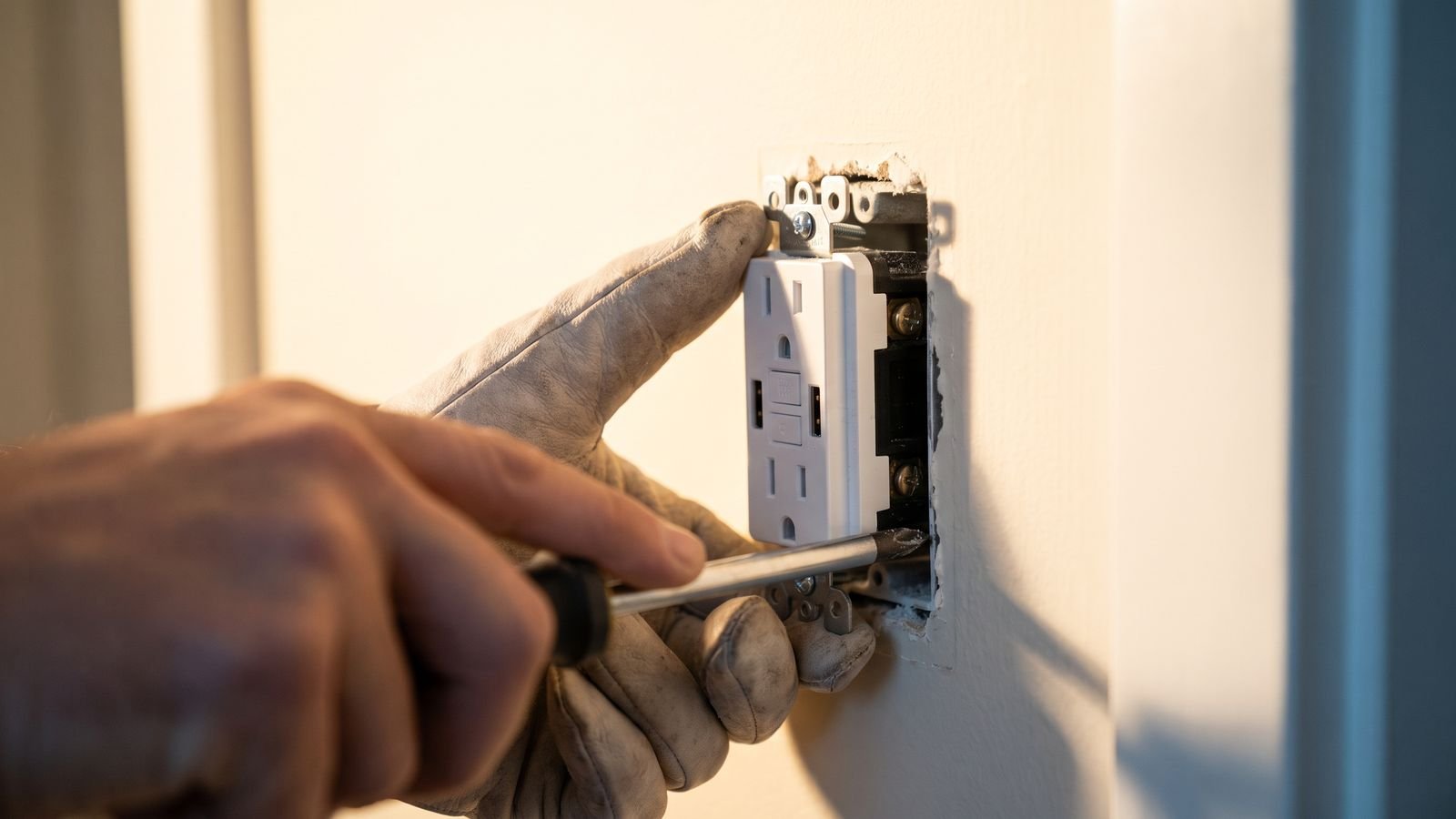
Dead outlet, loose plug, or need one where there is none? Gale Electric installs and repairs outlets in Kennewic
See details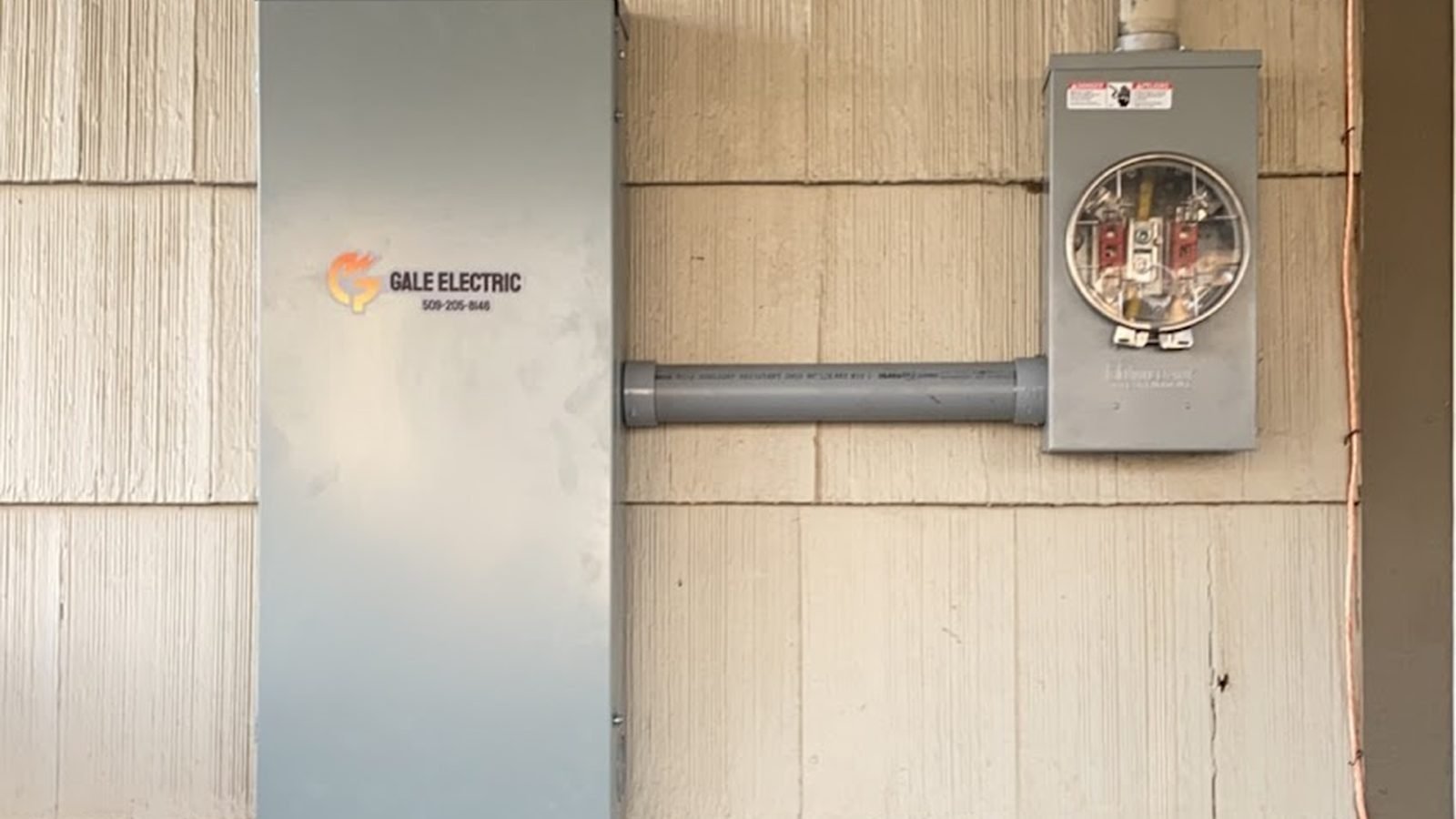
Out of breaker spaces but not out of power? A sub panel adds circuits for a shop, garage, or addition. Gale Elec
See details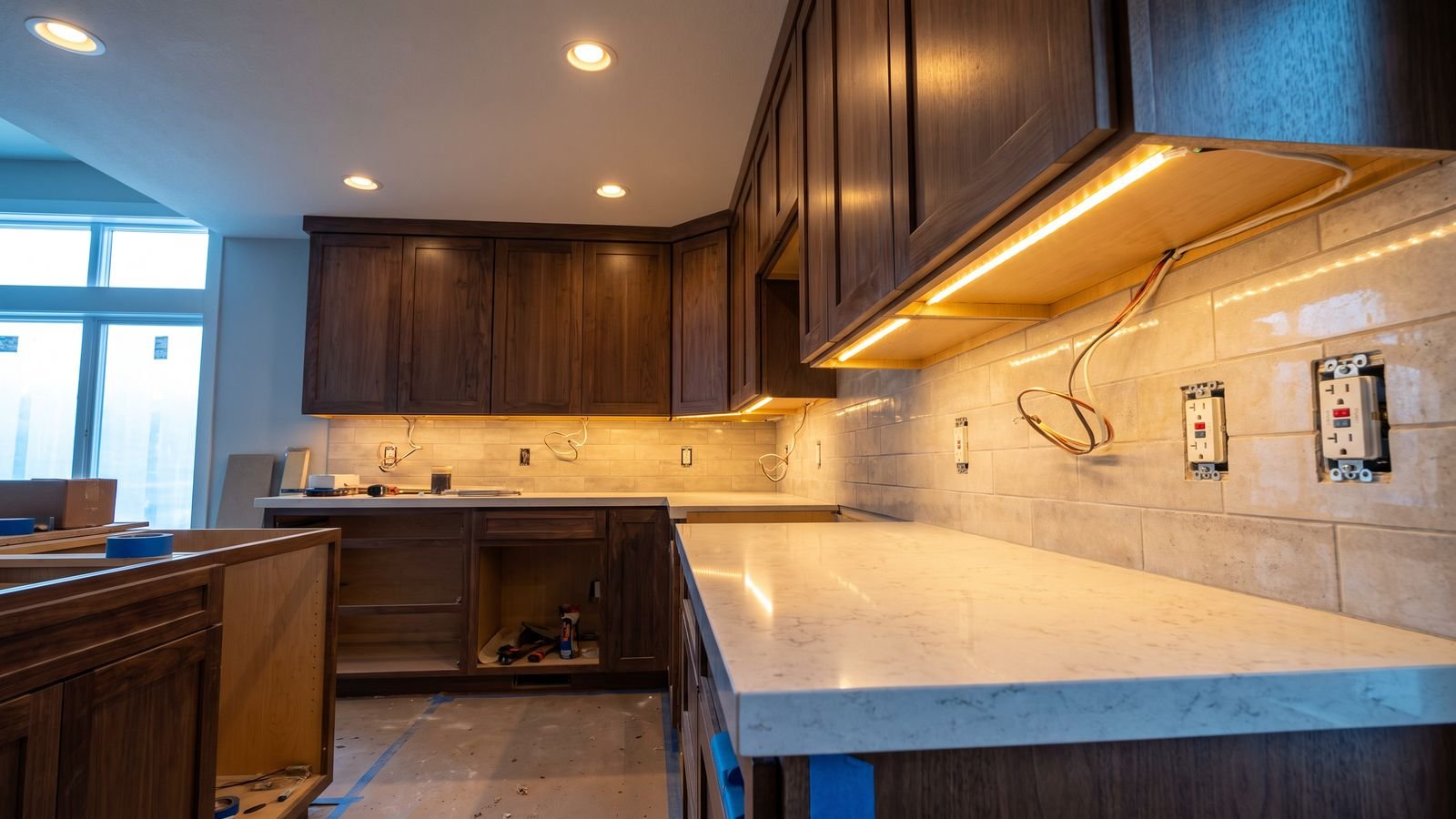
Kitchen remodel wiring in Kennewick, Richland, and Pasco. Appliance circuits, GFCI outlets, and layered lighting
See detailsFree estimates across the Tri-Cities. Call Kyle and the crew, or send the details and we will come look.
We use cookies for basic analytics and to see which ads bring people here. No personal data is sold. Privacy policy