
You just installed a heat pump
Variable-speed compressors and inverter boards are the most surge-sensitive equipment in a modern house, and the most expensive to replace.
A whole home surge protective device mounts at your panel and clamps voltage spikes before they travel down branch circuits into your equipment. It is now required by code on new and replaced dwelling services in Washington, and it is one of the least expensive things you can add to a panel. Installation takes under an hour on most homes.
Variable-speed compressors and inverter boards are the most surge-sensitive equipment in a modern house, and the most expensive to replace.
LED drivers die from repeated small surges long before the diodes wear out. Premature failures across the house are a clue.
Current code requires a surge protective device when a dwelling service is installed or replaced, so it comes with the work.
Utility switching and reclosing after a windstorm creates voltage transients every time the line comes back.
Well pump controllers, garage door boards, smart thermostats, and appliance control boards all fail the same way.
Most people picture lightning, and lightning is the dramatic case. The everyday reality is different. The majority of the transients that kill equipment are generated inside your own house by motors switching off, or they arrive from the utility when a line reconnects after a fault. Around here that second category matters. Wind takes a line down, protective equipment operates, and when power returns the moment of reconnection puts a spike on the system that every device in the house feels.
The damage from small repeated surges is quiet and cumulative. Nothing bangs. A control board just fails eighteen months earlier than it should have, a garage door opener stops responding, LED drivers start dying one at a time, and everyone blames cheap parts. Meanwhile the surge-sensitive equipment count in a typical home keeps climbing, because the furnace, the range, the dishwasher, and the thermostat all now contain circuit boards that a 1970s house simply did not have.
A surge protective device sits in parallel with your electrical system doing nothing at all until voltage climbs past a set threshold. At that moment it becomes conductive and diverts the excess energy to ground, then goes back to sitting quietly. The specification that matters is the voltage protection rating, which is how much voltage still passes through during an event, and the surge current rating in kiloamps, which describes how much energy it can absorb before it wears out.
It has limits, and honest limits are worth stating. No device stops a direct lightning strike on your structure, and anyone claiming otherwise is selling. A panel-mounted device also does nothing about a surge generated by a motor downstream of it on the same branch circuit. What it does very well is stop the incoming spikes that arrive through the service, which is the category that takes out multiple appliances at once and generates the insurance claim.
The right approach is two stages. Stage one is the device at the panel, which handles the large incoming energy and takes the spike down to a manageable level. Stage two is point-of-use protection at the equipment you most care about, meaning real surge strips with a joule rating, not a plain power tap, at the computer, the television, and the home office. The panel device makes the strips effective by leaving them a much smaller job to do.
Installation details change performance more than most homeowners realize. The leads between the device and the breaker need to be short and as straight as practical, because every extra inch of conductor adds voltage during a fast event. Nipple-mounting the unit directly to the panel enclosure beats a long flexible whip. Some devices also need dedicated breaker space, which is one more reason we look at the panel before quoting rather than after.
NEC 230.67 requires a surge protective device on services supplying dwelling units, and it applies to service equipment that is replaced, not only to new construction. Washington adopts the National Electrical Code through WAC 296-46B, and Labor and Industries handles electrical inspections across most of Benton and Franklin County, with the City of Richland running its own inspection program inside city limits. If you are getting a panel or a service upgrade, the device is part of the job.
For an existing panel that is not being replaced, adding one is optional but simple. It is a breaker space, a short conductor run, and a bonding connection, usually under an hour of work with the power off. Most units carry a status light or an audible indicator, because the modules are consumable and degrade with each event absorbed. Checking that light once in a while is the only maintenance the device ever asks of you.
We confirm there is space, check the bus condition and the grounding, and pick a device rated for your service.
One line item, with the voltage protection rating and surge current rating written down so you know what you are getting.
Power off, device nipple-mounted to the enclosure, leads kept short, connected to a dedicated two-pole breaker and the grounding system.
We energize, confirm the status indicator, and show you what a failed module looks like so you know when to call.
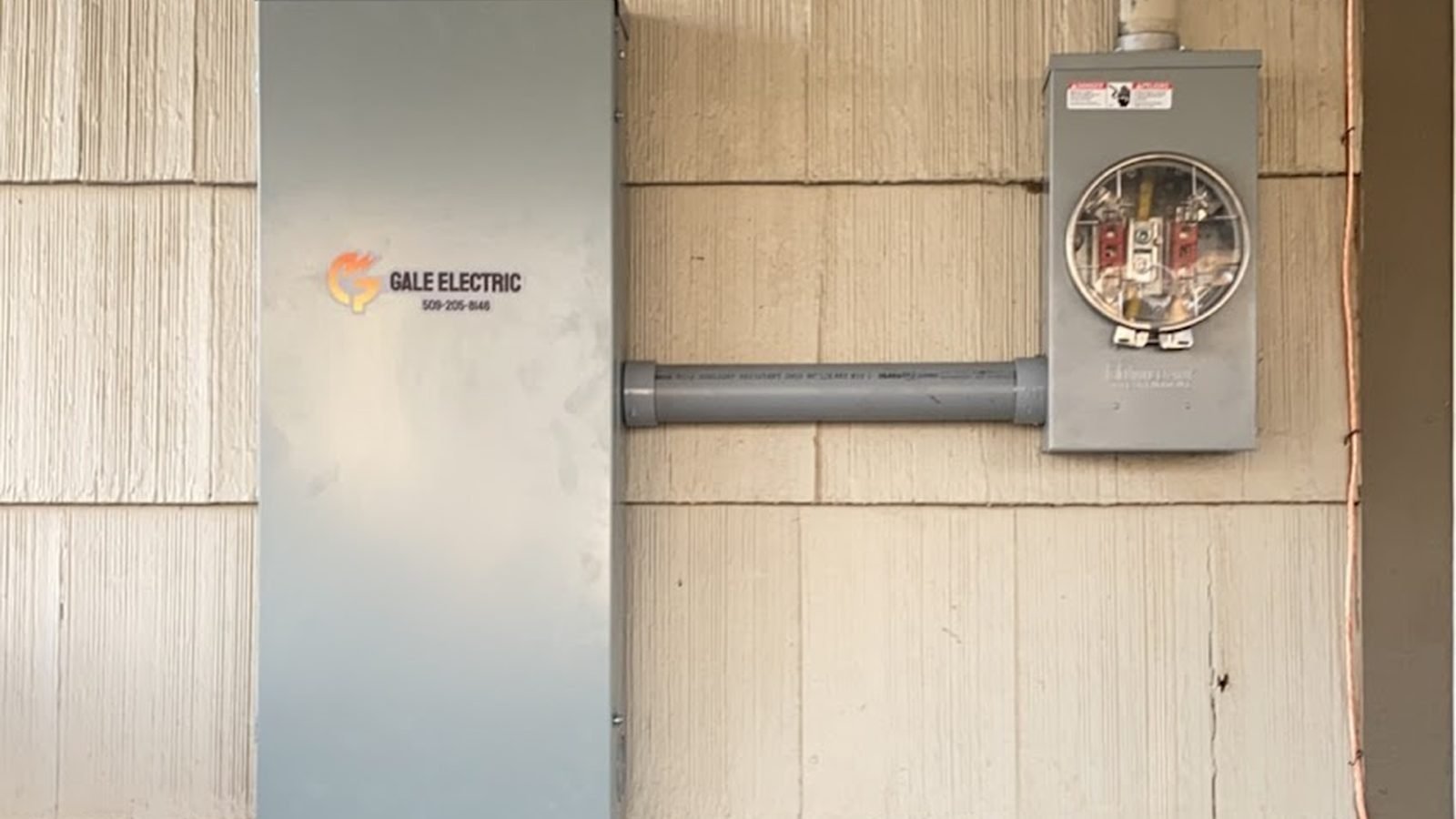
Out of breaker space for a heat pump, shop, or EV charger? Gale Electric upgrades residential panels across the
See detailsHeat pump and HVAC circuits in Kennewick, Richland, and Pasco. Correct breaker sizing, disconnects, and panel ca
See detailsResidential electrical inspections in Kennewick, Richland, and Pasco. Panel, grounding, and wiring checked by a
See detailsFree estimates across the Tri-Cities. Call Kyle and the crew, or send the details and we will come look.
We use cookies for basic analytics and to see which ads bring people here. No personal data is sold. Privacy policy