
Plugs fall out of the slots
Worn contacts inside the receptacle no longer grip the blades. A loose grip means a small arc every time the appliance cycles, which heats the device and eventually the box behind it.
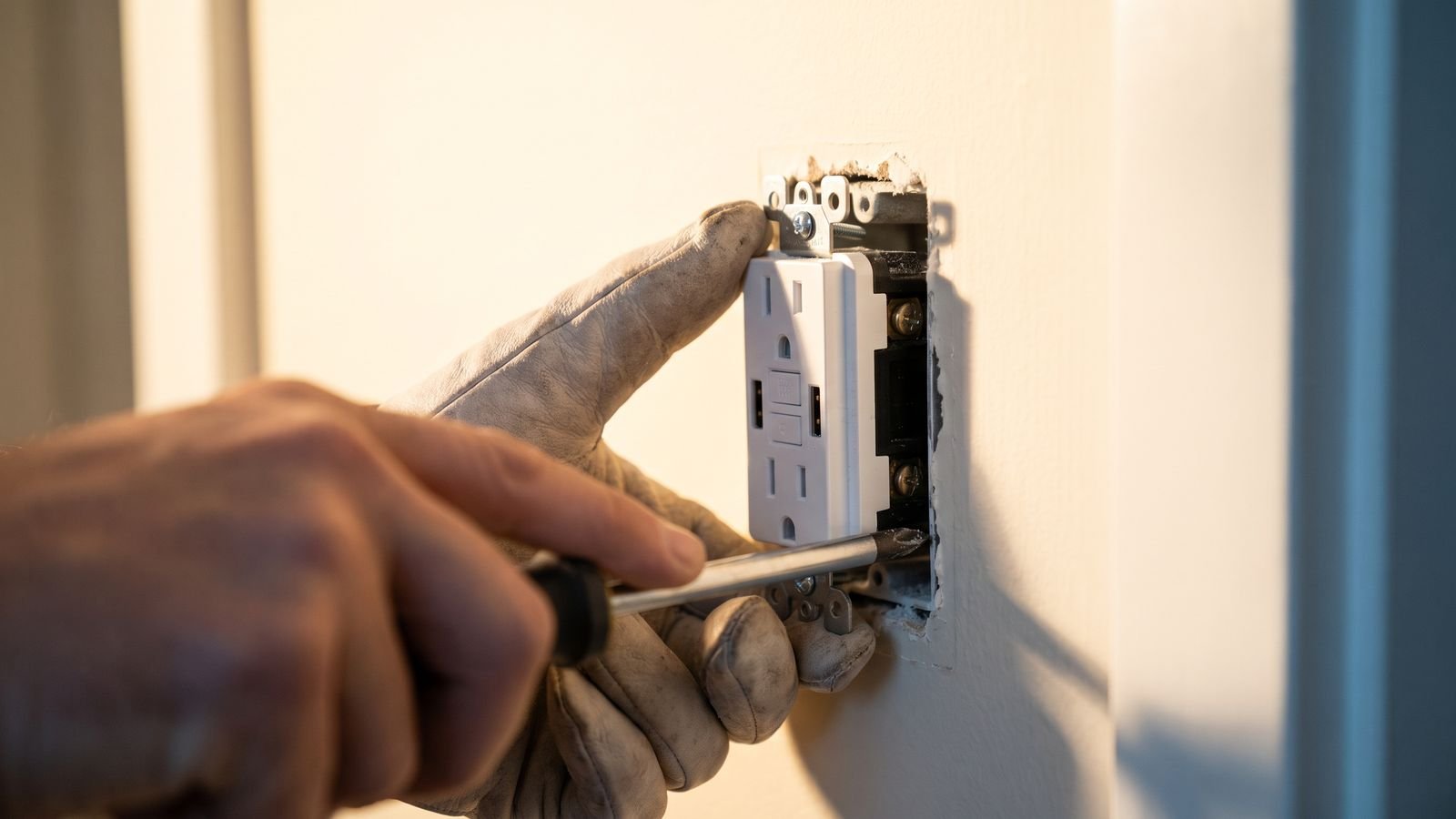
An outlet that quit, a plug that falls out of the wall, a room with one receptacle and four things to plug in. These are small jobs that get put off for years, and a few of them are early warnings of something worse behind the drywall. Gale Electric repairs and installs outlets across Kennewick, Richland, Pasco, and West Richland, and tells you which category yours falls into.
Worn contacts inside the receptacle no longer grip the blades. A loose grip means a small arc every time the appliance cycles, which heats the device and eventually the box behind it.
Any discoloration, melting, or soot around the slots means arcing has occurred. Stop using it, turn the circuit off, and have it opened. The damage inside the box is usually worse than what shows on the wall.
Several outlets losing power together points to one failed connection upstream on the circuit, often a back stabbed device or a loose neutral in a box behind furniture. Chasing it takes a meter, not guesswork.
A receptacle that hums under load or feels warm has a resistive connection. That is heat being generated inside a plastic box in a wall cavity, and it does not resolve by unplugging the lamp.
Two prong receptacles mean an ungrounded circuit. Anything you plug in that expects a ground, from a computer to a surge protector, is not getting one, and the surge protector in particular cannot do its job.
The most common cause is a failed back stab connection. Many receptacles allow the wire to be pushed into a hole in the back instead of wrapped around the screw terminal, and that spring contact loosens over years of thermal cycling. When it fails, everything downstream on that circuit goes dead, which is why one bad device can take out half a room. Repair means finding the box, cutting back the conductor, and landing it on the screw terminal properly.
Other causes include a tripped GFCI in an unrelated location that protects the dead outlet, a loose neutral splice in a junction box, a failed breaker, or a rodent chewed conductor in a crawlspace. Kyle troubleshoots with a meter and works the circuit from the panel out, rather than replacing devices until something changes. Customers here have specifically mentioned him finding problems other electricians could not, and that is the method behind it.
Older Tri-Cities homes were wired for a lamp and a radio. Current code wants a receptacle within six feet of any point measured along the floor line of a wall, which means no spot on a wall is more than a six foot cord from power. Bedrooms with one outlet, living rooms with two, and garages with a single receptacle by the door are all common in houses built before the 1970s, and all of them are fixable without opening a wall from end to end.
New receptacles are added by extending an existing circuit where its load allows, or by running a new home run from the panel when it does not. Which one applies depends on what is already on that circuit, and it is worth asking, because chaining six new outlets onto a bedroom circuit that already carries a window air conditioner just relocates the problem. Kyle checks the existing load before deciding, and puts the approach on the estimate.
If your house has two prong receptacles, the circuit has no equipment ground. Installing a three prong device on it is a code violation and gives a false signal to everything you plug in. NEC 406.4(D) provides two legitimate paths: run a new grounded circuit, or protect the ungrounded receptacle with a GFCI and label it as ungrounded. The GFCI protects people from shock. It does not create a ground, and a surge protector still will not function correctly.
GFCI protection is required in kitchens, bathrooms, garages, unfinished basements, laundry areas, crawlspaces, and outdoors under NEC 210.8. Tamper resistant receptacles are required in dwelling units under 406.12, which is the shutter mechanism that keeps a child from inserting an object into one slot. Both requirements get applied when devices are replaced, and both are inexpensive at the time of the work compared to going back through the house later.
Outdoor receptacles in the Tri-Cities take a beating. Direct summer sun past 100 degrees degrades plastic covers, and dust and irrigation overspray get into anything not properly sealed. Code requires weather resistant receptacles with an in use cover for outdoor locations, which is the bubble style cover that keeps a cord connection protected while it is plugged in. A flat flip lid does not satisfy that when something is plugged in and left there.
Garages are their own case. NEC requires GFCI protection for garage receptacles, and a garage in this climate often houses a freezer or a second refrigerator, which people worry about tripping on a GFCI. Modern GFCI devices are far less prone to nuisance tripping than older ones, and a dedicated circuit for the freezer is usually the better fix than an exception. Kyle will lay out the options rather than just quoting the cheapest device.
For a dead or failing outlet, Kyle works the circuit from the panel with a meter to find the actual failed connection instead of swapping devices until something works.
You get a price before anything is opened up, including whether the fix is a device, a splice repair in a junction box, or a new circuit. No open ended hourly surprises.
New and replacement receptacles are tamper resistant, GFCI protected where the location requires it, and weather resistant with in use covers outdoors. Conductors land on screw terminals.
Every device is tested for correct polarity, ground continuity, and GFCI function, and any ungrounded receptacle allowed under NEC 406.4(D) gets the required label.
Licensed Tri-Cities electrician installing GFCI and AFCI protection in kitchens, baths, garages and bedrooms. Fr
See details
Breaker trips when the microwave and toaster run together? Gale Electric installs dedicated appliance circuits a
See detailsElectrical troubleshooting in Kennewick, Richland, and Pasco. Tripping breakers, dead outlets, flickering lights
See detailsFree estimates across the Tri-Cities. Call Kyle and the crew, or send the details and we will come look.
We use cookies for basic analytics and to see which ads bring people here. No personal data is sold. Privacy policy