
Winter windstorms take you out
Columbia Basin wind events knock lines down most winters. If your street loses power more than once a season, you already know the pattern.
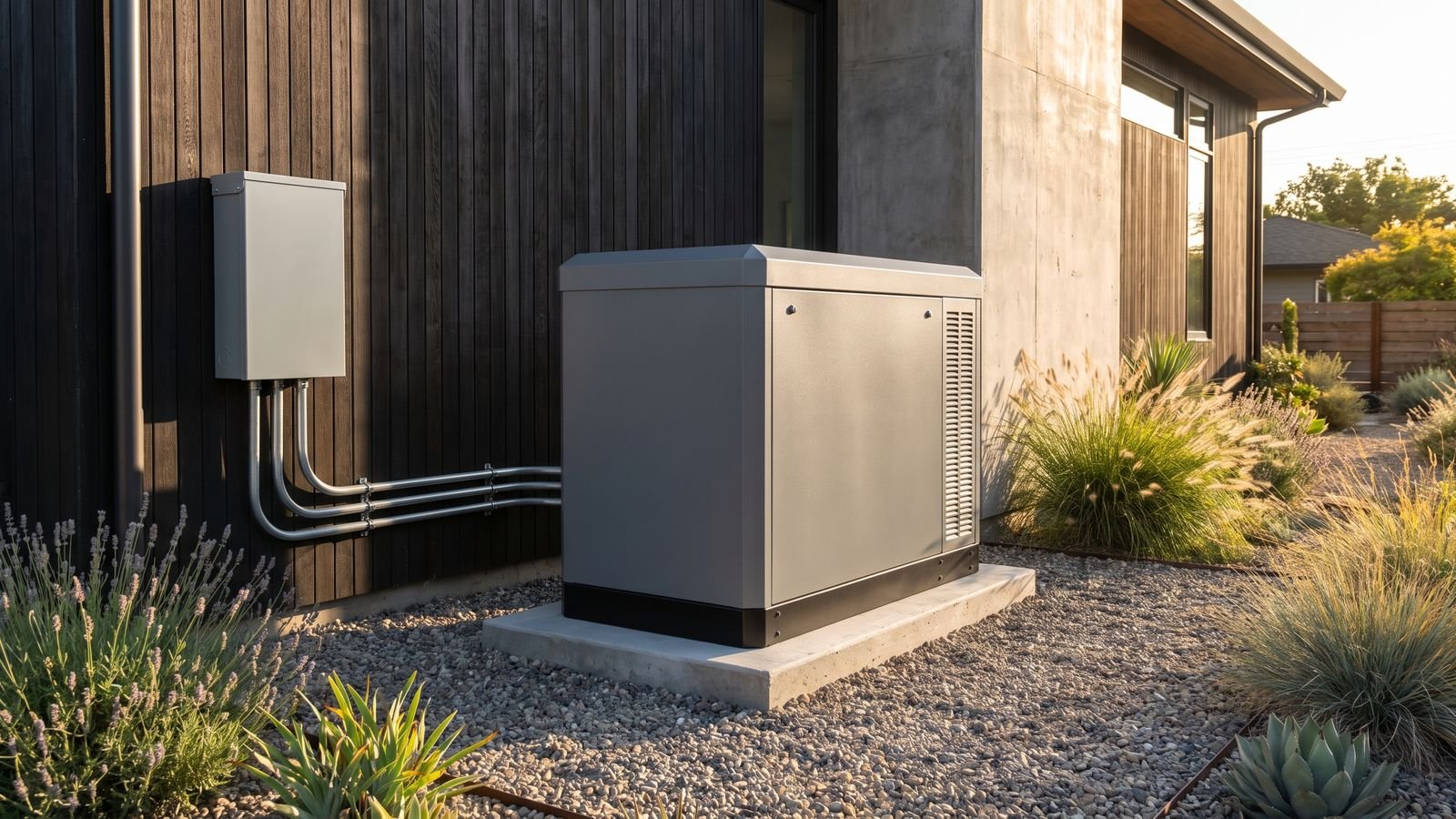
A standby generator sits outside on a pad and starts on its own when the utility power drops. It runs on natural gas or propane, so there is no fuel to haul during a windstorm. We size the unit to your actual load, set the pad, wire the transfer switch, and pull the permit. Most homes come back up within about half a minute of an outage.
Columbia Basin wind events knock lines down most winters. If your street loses power more than once a season, you already know the pattern.
No power means no water, no toilets, and no livestock trough. A generator is the only fix that runs unattended.
Oxygen concentrators, CPAP machines, and powered beds cannot wait for a crew to restore the line.
Half a beef or a season of game is real money sitting in a chest freezer. Outages past a day put it at risk.
Router, laptop, and lighting draw very little, but you need them steady. A generator keeps the workday going.
A standby generator does not automatically back the whole house. Most installs here land in one of two setups. A whole-house unit carries the entire panel, so the heat pump, the well pump, and the kitchen all run without thinking about it. A managed-load setup pairs a smaller generator with load-shedding modules that pause the air conditioner for a moment while the range or dryer pulls current. Both work fine. The difference is the price of the unit and how much rationing you want to do during an outage.
The circuits most homeowners in Richland and Kennewick care about are the furnace or heat pump, the refrigerator and freezer, the well pump if you are outside city water, a few lighting circuits, and the outlets that keep phones, routers, and medical equipment alive. Septic and sump pumps matter on the properties closer to the river. Kyle walks the panel with you and writes down which breakers actually matter to your family, because a generator sized off a square footage chart is a guess dressed up as a number.
Sizing starts with a load calculation, not a rule of thumb. The number that drives it is usually the largest motor. A central air condenser or a heat pump compressor pulls a hard inrush at startup, and a submersible well pump does the same. On a 100F Tri-Cities July afternoon that inrush is the moment the generator either holds or stumbles. Sometimes the right answer is a soft starter on the condenser instead of a bigger generator, which keeps the unit smaller and the gas line simpler.
The other half of the sizing conversation is your existing service. Plenty of the 1940s and 1950s Hanford-era homes in Richland still run 100 amp services and panels that were full ten years ago. Adding a generator to a panel with no room, double-tapped breakers, or a failing bus does not go well. If the panel needs attention we say so during the estimate and quote it separately, so you can decide instead of finding out on install day.
Generator work is permitted and inspected. Across most of Benton and Franklin County the Washington Department of Labor and Industries handles the electrical permit and the inspection. Inside Richland city limits the city runs its own electrical inspection program, so the paperwork goes a different direction depending on jurisdiction. We pull the electrical permit and meet the inspector. The gas side is its own trade. A licensed gas fitter runs and sizes the fuel line, and the meter sometimes has to be upsized to feed the generator and the furnace at once.
Placement follows the manufacturer instructions and the fuel code, not preference. Units need clearance from the wall and a set distance from doors, operable windows, and dryer or furnace vents so exhaust cannot find its way inside. We set the unit on a composite or poured pad, keep it out of the path of roof runoff, and think about the neighbor's bedroom window before we pick the spot. Blowing dust is a real factor here, so we avoid low corners where sand and tumbleweed pile up against the intake.
A standby generator is a small engine, and it needs the same care as one. It runs a self-test on a schedule you can set, usually weekly or biweekly, for about ten minutes. That exercise cycle is what tells you the battery is charged and the fuel valve still works. Oil and filter service runs on hours and calendar time from the owner's manual. We show you the run-hour readout, the oil drain, and the shutoff at handoff so nothing about the machine is a mystery to you.
During an actual outage the controller waits a few seconds to confirm the utility is really gone, starts the engine, lets it come up to speed, and then the transfer switch moves your load over. When the utility comes back, it waits again before handing the load back and cools the engine down before shutting off. Most current units include a cellular or wifi module so you get a notification instead of learning about the outage from a neighbor two days later.
We open the panel, look at the service size and available spaces, and list the circuits you want backed. That list drives everything else.
You get a written quote with the generator size, the transfer switch type, and the location marked. Estimates are free and there is no pressure to buy up.
We set the pad, coordinate the gas fitter, run the conductors and the control wiring, and install the transfer switch at or near the meter.
We meet the inspector, then commission the unit, set the exercise timer, and run a live test with the utility cut so you see it work.
Generator transfer switch installation in Kennewick, Richland, and Pasco. Automatic switches, manual switches, a
See detailsHome battery backup installation in Richland, Kennewick, and Pasco. Silent standby power, no fuel, sized to the
See details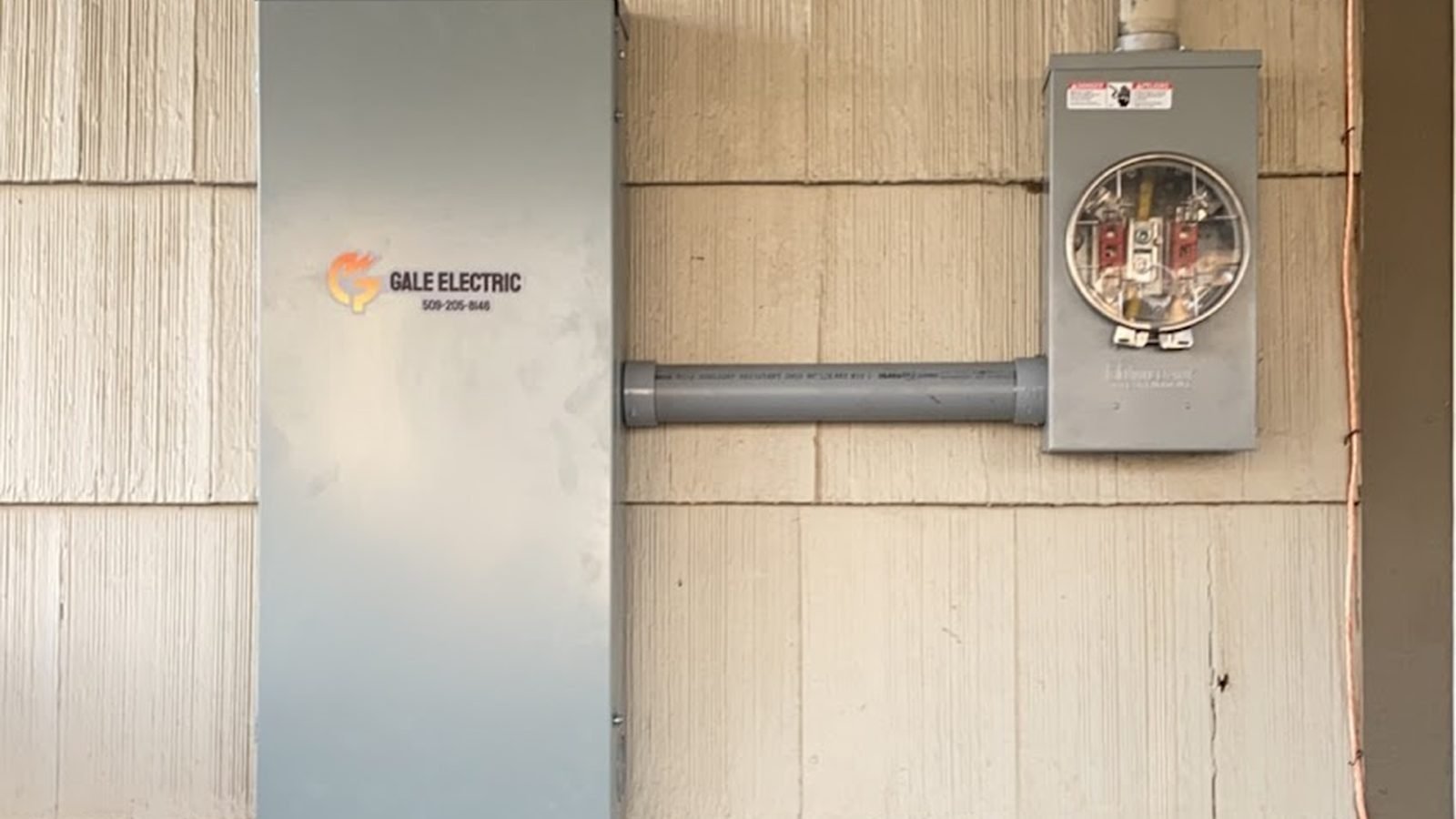
Out of breaker space for a heat pump, shop, or EV charger? Gale Electric upgrades residential panels across the
See detailsFree estimates across the Tri-Cities. Call Kyle and the crew, or send the details and we will come look.
We use cookies for basic analytics and to see which ads bring people here. No personal data is sold. Privacy policy