
No test buttons anywhere
If you cannot find a TEST and RESET button in the bathroom, kitchen, garage or on the exterior, those areas likely have no ground-fault protection at all. That is standard in Tri-Cities homes wired before the 1990s.
A GFCI watches for current leaking out of the circuit and cuts power in a fraction of a second. An AFCI listens for the electrical signature of arcing inside a wall. Both are required in specific parts of a house, and most Tri-Cities homes built before the mid-1990s do not have full coverage. Kyle Gale installs and tests both, and shows you what each one protects.
If you cannot find a TEST and RESET button in the bathroom, kitchen, garage or on the exterior, those areas likely have no ground-fault protection at all. That is standard in Tri-Cities homes wired before the 1990s.
A device that trips the moment you press RESET is usually reporting a real fault downstream, not failing on its own. Something on that circuit is leaking current to ground and needs to be found.
Heat and browning around the face mean loose terminals or a failing device. Loose connections arc, and arcing inside a wall box is how outlet fires start.
Two-slot receptacles have no equipment grounding conductor. Where rewiring is not practical, NEC 406.4(D) allows a GFCI to replace them with the required No Equipment Ground label.
Motor loads with worn brushes throw off arcing that an AFCI is designed to catch. Sometimes the appliance is the problem and sometimes the branch circuit is, and testing tells you which.
A ground-fault circuit interrupter compares the current going out on the hot conductor to the current coming back on the neutral. If more than about 4 to 6 milliamps goes missing, the device assumes the difference is traveling through something else, possibly a person, and it opens the circuit in well under a tenth of a second. That threshold is set by UL 943, and it sits far below the level that stops a heart. This is the whole reason GFCIs are required anywhere near water.
NEC 210.8(A) lists the dwelling locations: bathrooms, garages, outdoors, crawl spaces, unfinished basements, laundry areas, and kitchen receptacles serving countertops. Recent code cycles pushed that further to cover receptacles within six feet of any sink and certain 250-volt outlets. Washington adopts and amends the NEC through WAC 296-46B, and the cycle that applies to your job is the one in force when the permit is issued. We install to whatever version the inspector is enforcing.
An arc-fault circuit interrupter is not looking for leaking current. It watches the waveform for the erratic high-frequency signature that a loose connection or a damaged conductor makes when it arcs. A staple driven too tight in 1958, a nail through a wire during a remodel, or a lamp cord pinched behind a bed can all produce arcing that never draws enough current to trip a standard breaker. The wire stays energized, the arc keeps going, and the surrounding material gets hot.
NEC 210.12 requires AFCI protection on most 15 and 20 amp, 120 volt branch circuits serving dwelling living areas. In practice that covers bedrooms, living rooms, hallways, closets and kitchens on new and rewired circuits. AFCI protection normally goes in at the panel as a combination breaker rather than at the outlet, because it needs to see the entire branch circuit. Older panels sometimes have no compatible AFCI breaker made for them, which turns the conversation into a panel upgrade.
Richland has a large stock of Hanford-era houses from the 1940s and 1950s, and the original wiring in those homes predates both GFCI and AFCI requirements. Many have been partially updated over seventy years, so one bathroom has protection and another does not. Kennewick and Pasco have plenty of 1960s and 1970s houses with the same mixed history. The first thing we do is map what is actually protected, rather than assuming the last person who worked on it did it right.
Two other things show up constantly. The first is a shallow wall box that a modern GFCI will not physically fit into, since these devices are deeper than the receptacles they replace. The second is backstabbed connections, where the wire was pushed into a hole in the back of the device instead of landing on the screw terminal. Those loosen over decades of heating and cooling cycles. We move every connection to the screw terminals or onto properly made pigtails.
Most GFCI work does not require opening walls. A single GFCI installed at the first device on a circuit protects everything downstream of it, so one correctly placed device can cover a whole run of outlets. That only works if the circuit is wired in a clean series and the load side is landed correctly, which is why we identify the first outlet on the run instead of simply swapping the one you pointed at. Guessing here is how half a house ends up unprotected.
Where a circuit has no ground and rewiring is not in the budget, NEC 406.4(D)(2) allows a GFCI to be installed on the ungrounded circuit and marked with the required No Equipment Ground label. That is a legitimate, code-compliant step, and it is honest about what it does and does not provide. It protects people from shock. It does not create a ground path for surge protectors or sensitive electronics. We tell you which one you are getting before we install it.
We test every existing GFCI and trace which outlets are actually protected. That map decides what you need and what you do not.
You get a written price for the specific devices and locations. Estimates are free, and no work starts until you approve it.
Devices go in with the line and load sides correct, every connection on a screw terminal, and boxes replaced where a modern device will not fit.
Every device is tripped and reset with a tester, protected outlets get labeled, and we show you how to run the monthly test yourself.
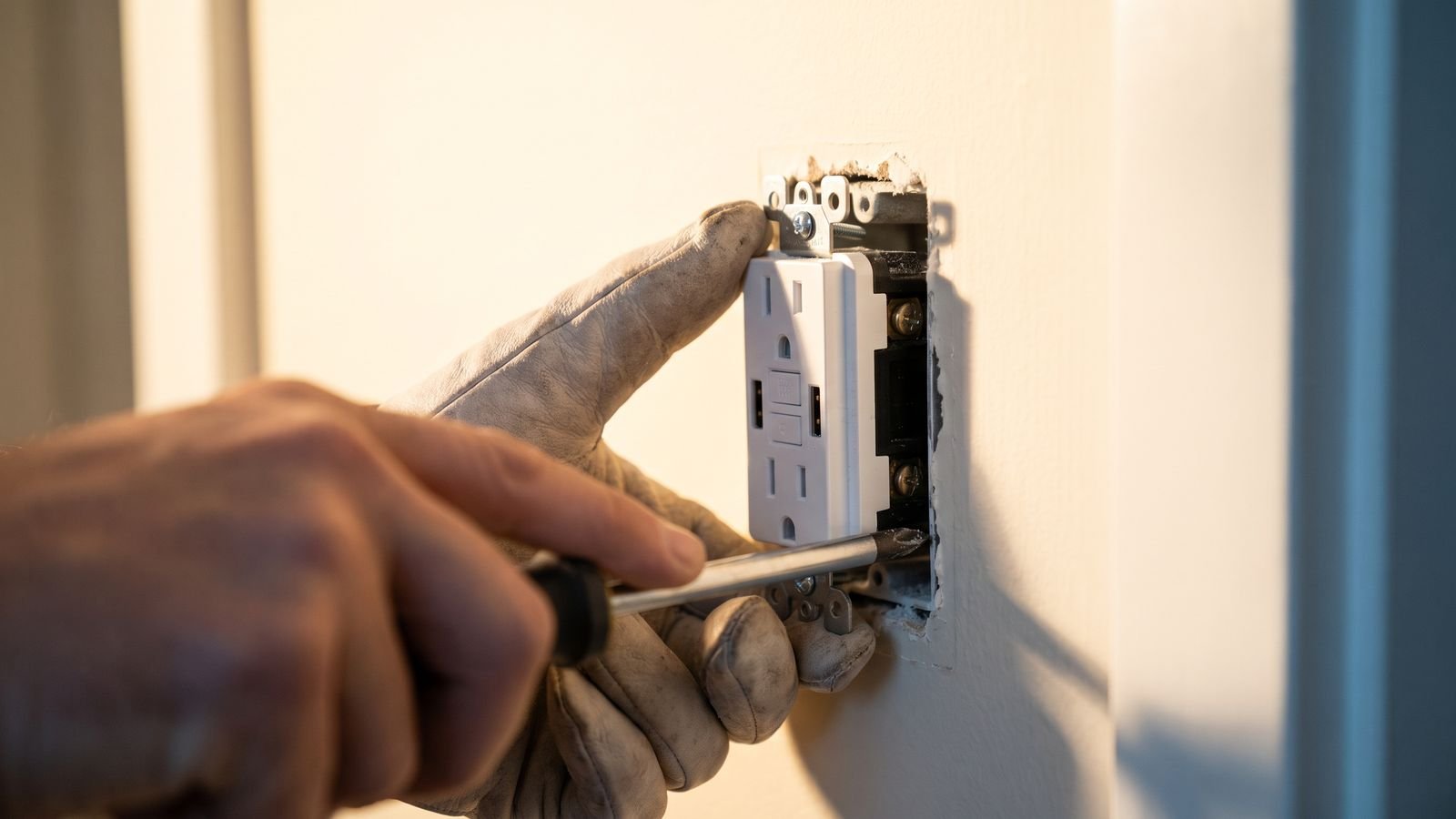
Dead outlet, loose plug, or need one where there is none? Gale Electric installs and repairs outlets in Kennewic
See details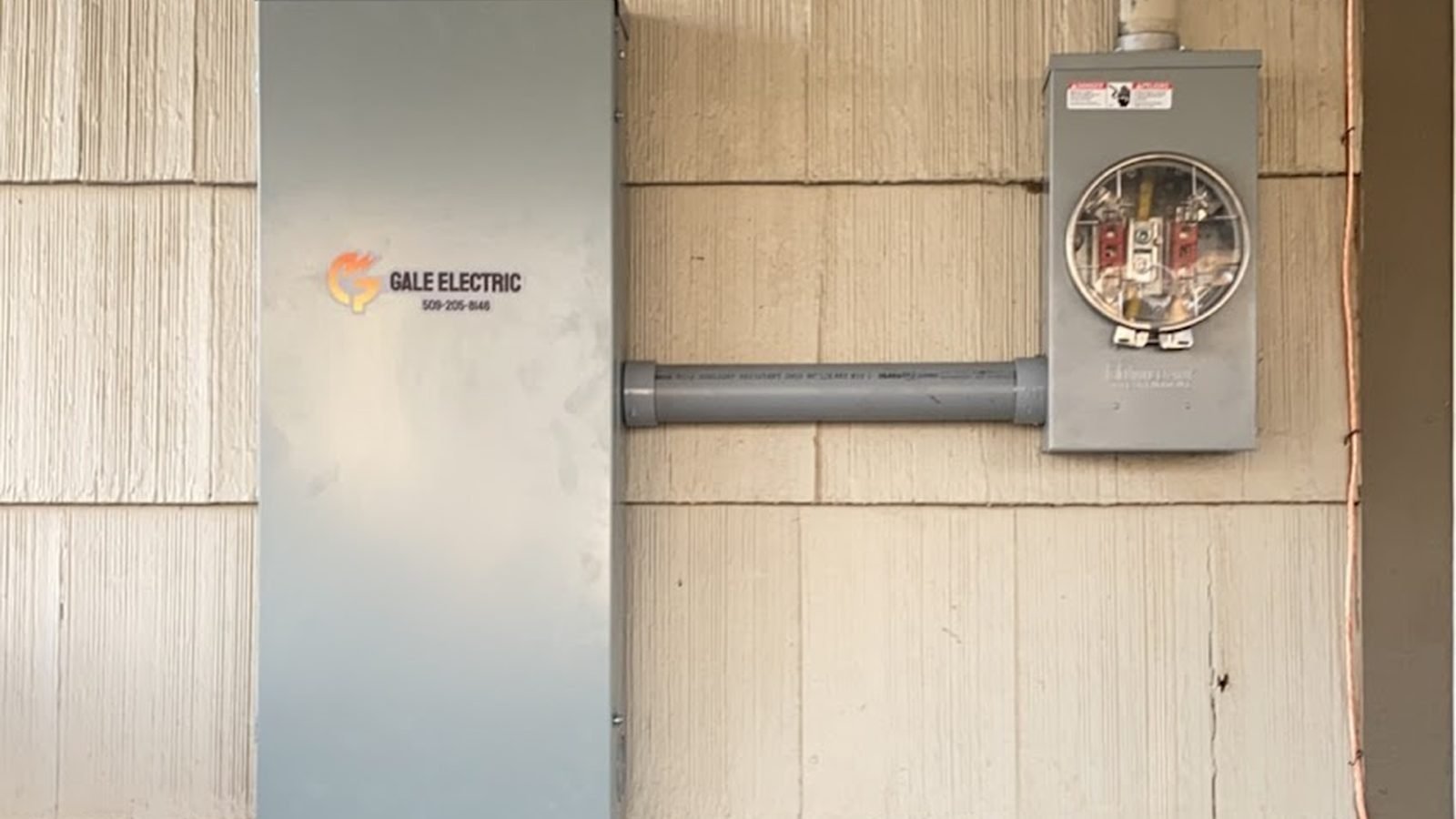
Out of breaker space for a heat pump, shop, or EV charger? Gale Electric upgrades residential panels across the
See detailsBreaker trips when the microwave and toaster run together? Gale Electric installs dedicated appliance circuits a
See detailsFree estimates across the Tri-Cities. Call Kyle and the crew, or send the details and we will come look.
We use cookies for basic analytics and to see which ads bring people here. No personal data is sold. Privacy policy