
New equipment is on order
Every heat pump and condenser has a nameplate that dictates the breaker and wire size. It rarely matches the old circuit.
New heating and cooling equipment needs its own circuit, sized to the nameplate, with a disconnect the service tech can reach at the unit. Get that wrong and the equipment either nuisance trips or loses its warranty. We handle the electrical side so your HVAC contractor shows up to a circuit that is ready, permitted, and correctly sized.
Every heat pump and condenser has a nameplate that dictates the breaker and wire size. It rarely matches the old circuit.
Tripping during a 100 degree stretch points at an undersized circuit, a failing breaker, or a compressor drawing more than it should.
Code requires a disconnecting means within sight of the equipment. Techs will not work on a unit without one.
Many Hanford-era homes were never wired for cooling. The service and the panel both need checking first.
Ductless systems need a dedicated circuit and a disconnect too, even though they draw far less than a central system.
Air conditioning and heat pump equipment is sized differently from ordinary loads, and NEC Article 440 covers why. The nameplate lists a minimum circuit ampacity and a maximum overcurrent protective device rating. The first number sets the conductor size, the second sets the largest breaker allowed. Both come from the manufacturer, and neither is a suggestion. A breaker larger than the listed maximum removes the equipment's short circuit protection and voids most warranties.
This is why we ask for the model number before quoting. A modern variable-speed heat pump and a twenty year old single-stage condenser of the same tonnage can call for completely different circuits, and inverter-driven equipment often needs a specific breaker type. Most residential outdoor units land somewhere in the 30 to 50 amp range at 240 volts, and an air handler with electric backup heat strips is frequently its own 60 amp circuit on top of that.
Plenty of the 1940s and 1950s houses in Richland and central Kennewick were built with no cooling at all and a service to match. Dropping a heat pump onto a 100 amp panel that already carries a range, a dryer, and a water heater is where the project stops if nobody checked first. We run a load calculation and look at the panel for available spaces, bus condition, and whether the existing breakers and conductors were correctly matched to begin with.
Sometimes the answer is that the existing service handles it fine. Sometimes it means a panel change or a service upgrade before the HVAC install date. Either way you hear it before your equipment is on a truck, not on install morning with a crew standing in the driveway. Summers here run past 100 degrees for stretches, so ambient temperature also matters for conductors run along a hot south wall or through an unvented attic, where derating can drive a larger wire size.
NEC 440.14 requires a disconnecting means within sight of the outdoor unit, meaning a technician can see and reach it from where they are working without asking anyone to go find a panel. We mount it on the wall next to the unit in a weather-rated enclosure, then run a listed whip to the equipment. That whip needs to be sized for the circuit and long enough for the unit to be serviced without straining the connection.
There is one more requirement that often gets missed on older installs. NEC 210.63 requires a 125 volt receptacle within 25 feet of heating, cooling, and refrigeration equipment for servicing, on both the indoor and the outdoor side. Techs need it for vacuum pumps and recovery machines, and its absence means extension cords running out a window. On indoor equipment we also handle the low voltage thermostat wiring and the condensate pump circuit when that is part of the job.
Ductless mini splits have become a common answer here for a converted garage, a shop, an addition, or a bedroom the central system never quite reaches. Electrically they are modest, with many single-zone systems running on a dedicated 15 or 20 amp 240 volt circuit, and they still need a disconnect at the outdoor unit. Multi-zone systems and larger single-zone units draw more, so the nameplate governs the same way it does on a full central system.
Heat pump water heaters are the other equipment we get called about. They typically want a 30 amp 240 volt circuit like a conventional electric water heater, though the location requirements are different because they pull heat from the surrounding air and need volume around them. A garage works well most of the year here, with the caveat that they blow cold air into the space, which most people find welcome in July and less so in January.
We read the actual nameplate data, minimum circuit ampacity and maximum overcurrent protection, before quoting anything.
Load calculation, available spaces, and bus condition, so any panel or service work is known before the HVAC install date.
Conductors sized for the load and the run, disconnect mounted within sight of the unit, whip installed, service receptacle addressed.
We time the work to your HVAC contractor's schedule, then pull the permit and meet the inspector.
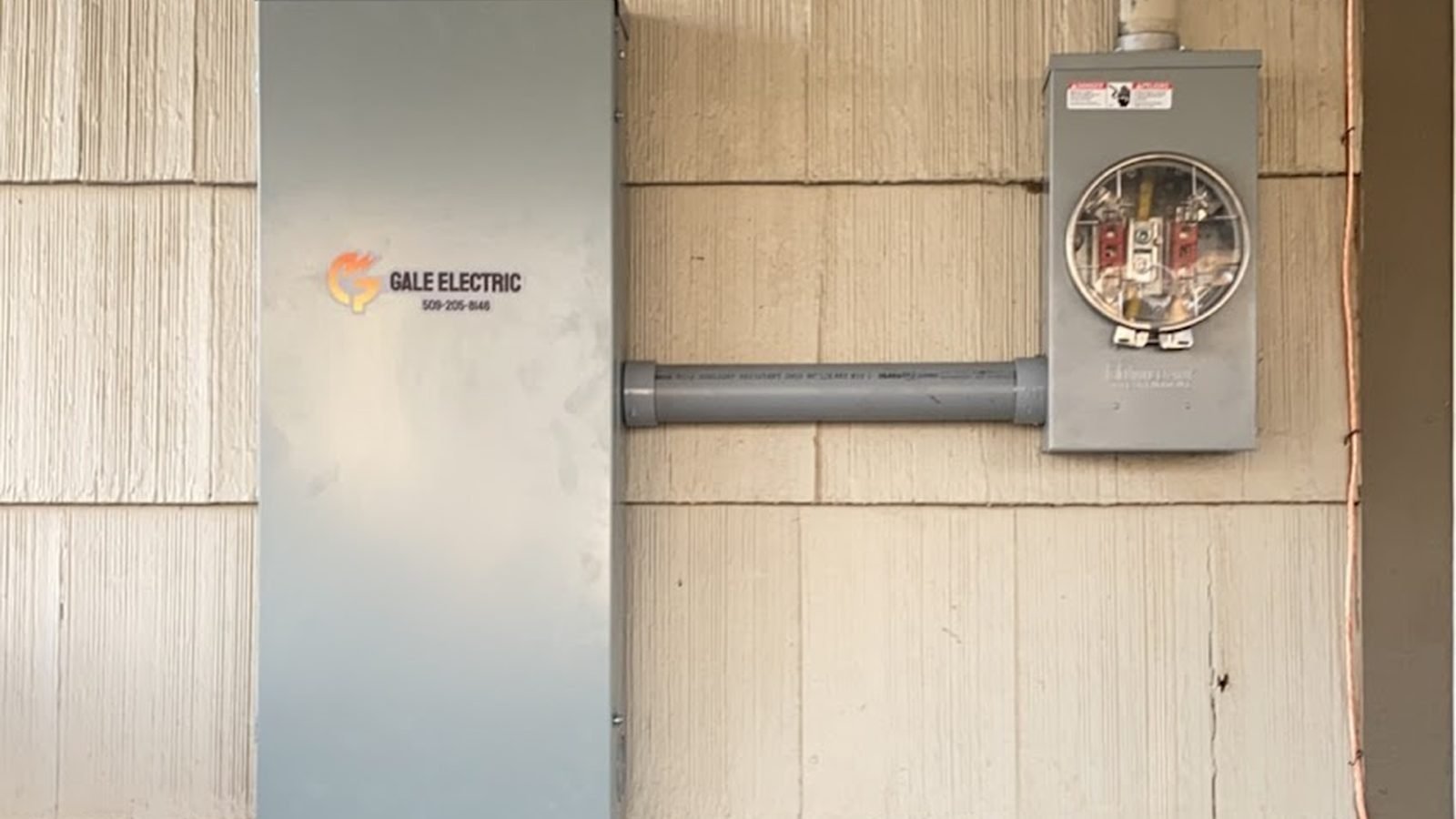
Breaker trips when the microwave and toaster run together? Gale Electric installs dedicated appliance circuits a
See detailsOut of breaker space for a heat pump, shop, or EV charger? Gale Electric upgrades residential panels across the
See detailsWhole home surge protection installed at the panel in Kennewick, Richland, and Pasco. Protect heat pumps, applia
See detailsFree estimates across the Tri-Cities. Call Kyle and the crew, or send the details and we will come look.
We use cookies for basic analytics and to see which ads bring people here. No personal data is sold. Privacy policy