
A breaker trips repeatedly
Once is a fluke. Every day at the same time of day is a fault, an overload, or a breaker that has worn out internally.
Tripping breakers, dead outlets, and lights that dim when the fridge kicks on are symptoms, not problems. The problem is a loose connection, a failing device, or a circuit carrying more than it should, and it is usually somewhere nobody thought to look. We trace it with meters and a method instead of replacing parts until the symptom stops.
Once is a fluke. Every day at the same time of day is a fault, an overload, or a breaker that has worn out internally.
That is an overheating connection. Turn the breaker off and call. Do not wait to see whether it goes away.
Devices should be room temperature. Warmth means resistance where there should be none, usually a loose terminal.
Lights that surge when a large load starts can indicate a failing neutral, which damages electronics fast.
Losing one of the two 120 volt legs points at the service or the main, on either the utility side or yours.
Troubleshooting is a process of elimination, done in order. First we get the symptom to happen on demand if we can, because a fault we can reproduce is a fault we can measure. Then we isolate the circuit, open the devices on it, and take readings under load rather than at rest. A great many problems read perfectly fine with nothing plugged in and fail the moment current flows, which is exactly why swapping parts blind rarely fixes anything permanently.
The tools do the work that guessing cannot. A clamp meter shows actual current on a conductor. An insulation resistance test finds a compromised cable inside a wall. A circuit tracer maps what feeds what when the panel labels are fiction, which they usually are. Thermal imaging shows a hot lug or a warm breaker before it burns. We write down what we measured so the fix is documented and you are not taking anyone's word for the diagnosis.
Loose connections cause more calls than anything else. The most common single culprit is a backstab termination, where the conductor was pushed into the back of a receptacle instead of wrapped around the screw. Those connections loosen with years of heating and cooling until they arc. Right behind that are failed neutral splices in ceiling boxes, corroded connections on aluminum branch wiring in 1965 to 1973 homes, and outdoor boxes and GFCI receptacles that have taken on water through a cracked cover.
Then there are the ones specific to how people live here. Rodents get into crawlspaces and attics and chew insulation off cable. Junction boxes get buried behind drywall during a remodel and quietly fail years later. Garage freezers, well pumps, and shop compressors get added to circuits that were never sized for them. And in a run of 100 degree days, marginal connections that held all winter finally show themselves, because heat is what pushes a weak termination over the edge.
Different breakers trip for different reasons, and knowing which kind you have narrows the search immediately. A standard breaker trips on overload, meaning too much current for too long, or on a short circuit. A GFCI trips at a leakage current around 5 milliamps, which means current is finding a path it should not have, often through moisture. An AFCI trips on the electrical signature of arcing, which can be a real loose connection or, sometimes, a noisy motor or a cheap power supply upsetting it.
Resetting a breaker once is reasonable. Resetting it repeatedly is not, because the breaker is doing its job and you are overriding it. If a breaker will not reset at all, or resets and immediately trips, stop and leave it off. And if a breaker itself is hot, discolored, or loose in the panel, that is the fault, and it needs to be dealt with before anything gets plugged back in.
Gale Electric is open Monday through Friday, 7AM to 5PM. We hold room in the schedule for same-day calls and, when the day is full, we get you first thing the next morning. We are not a 24 hour outfit and will not tell you otherwise. What we will do is talk you through what to shut off and how to stay safe until we arrive, which for most electrical faults is the part that actually matters overnight.
Some situations are not ours first. If anything is on fire or smoking, get everyone out and call 911. If a power line is down, on the ground, or in a tree, stay well back and call Benton PUD or Franklin PUD, because everything from the transformer to the meter belongs to them. If your neighbors are dark too, it is an outage, not your wiring. Past the meter, into the house, that is where we take over.
When it started, what was running, what has changed in the house. Half of diagnostics is knowing what to reproduce.
We identify and map the affected circuit, correct the panel labels while we are in there, and separate it from everything else.
Readings taken with current flowing, plus insulation testing or thermal imaging where the symptom points that direction.
We fix the actual defect, then run the circuit under load again and show you the readings before and after.
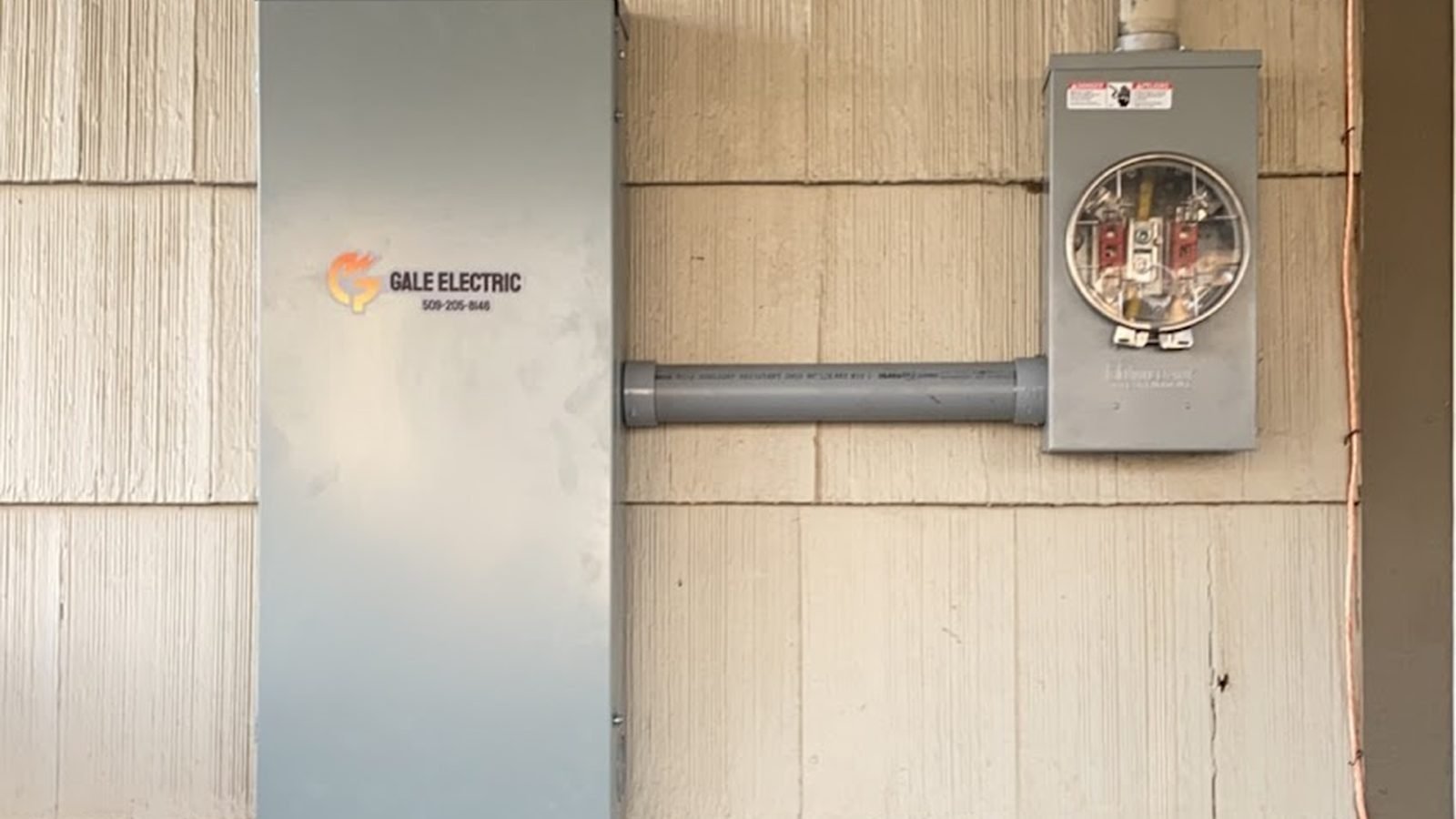
Residential electrical inspections in Kennewick, Richland, and Pasco. Panel, grounding, and wiring checked by a
See detailsOut of breaker space for a heat pump, shop, or EV charger? Gale Electric upgrades residential panels across the
See details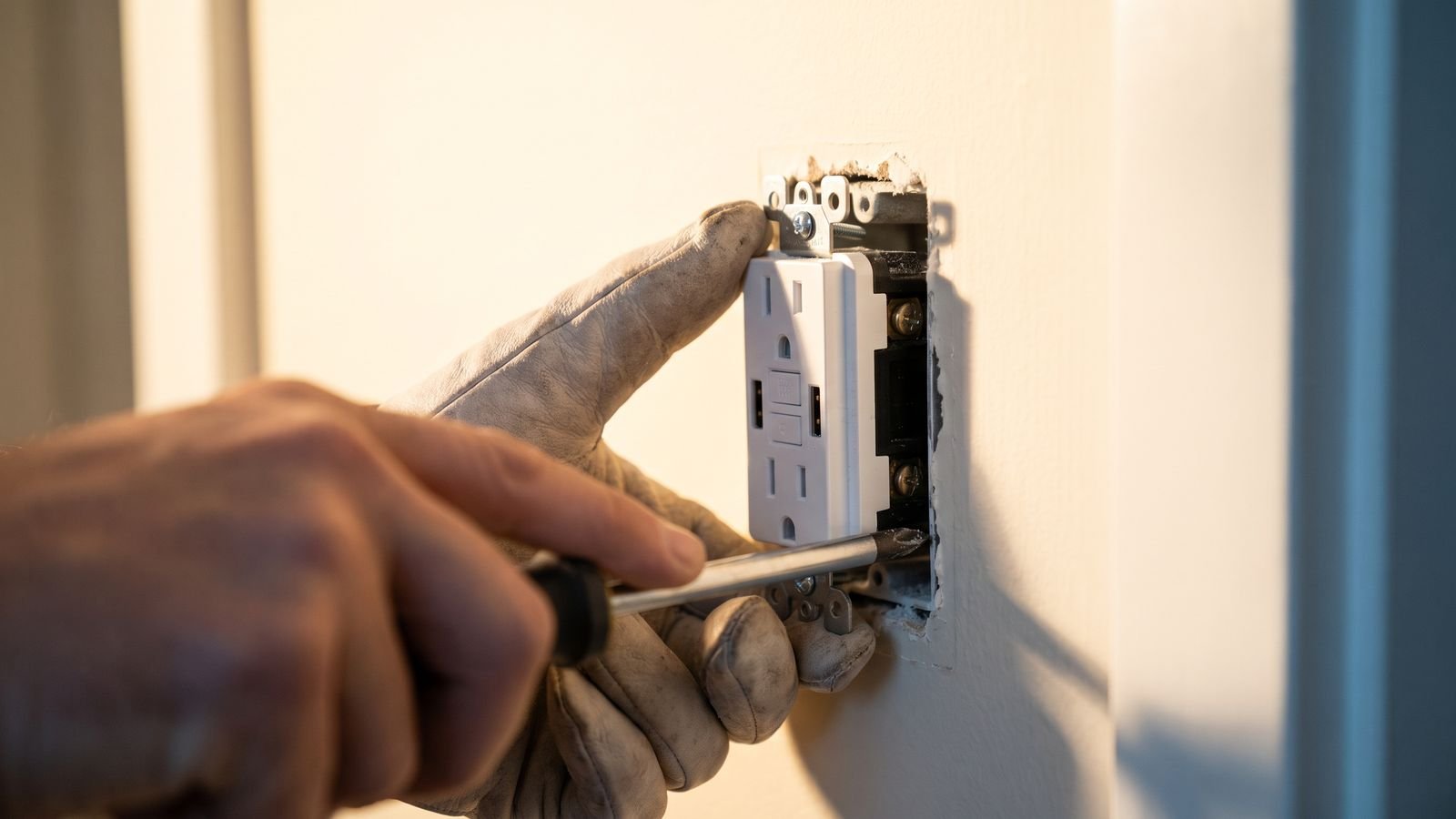
Dead outlet, loose plug, or need one where there is none? Gale Electric installs and repairs outlets in Kennewic
See detailsFree estimates across the Tri-Cities. Call Kyle and the crew, or send the details and we will come look.
We use cookies for basic analytics and to see which ads bring people here. No personal data is sold. Privacy policy